Eight Production-Ready Models for Book Capture, Scanning and Classroom AV
These models represent the practical building blocks of a custom OEM book camera programme. Product links below are preserved from the original product list and can be used directly for evaluation, sample requests and tender comparisons.
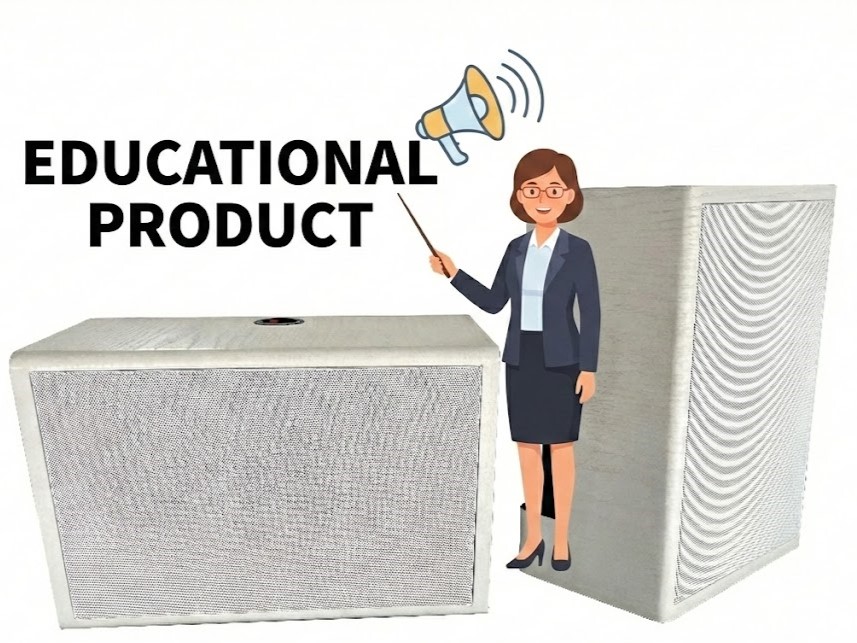
SHENMAIDI MD-S50A 50W Education Infrared Integrated Stereo Sound Amplifier
50W classroom amplification with infrared wireless microphone integration, CE certification and a 1-year warranty for daily teaching use.
View product details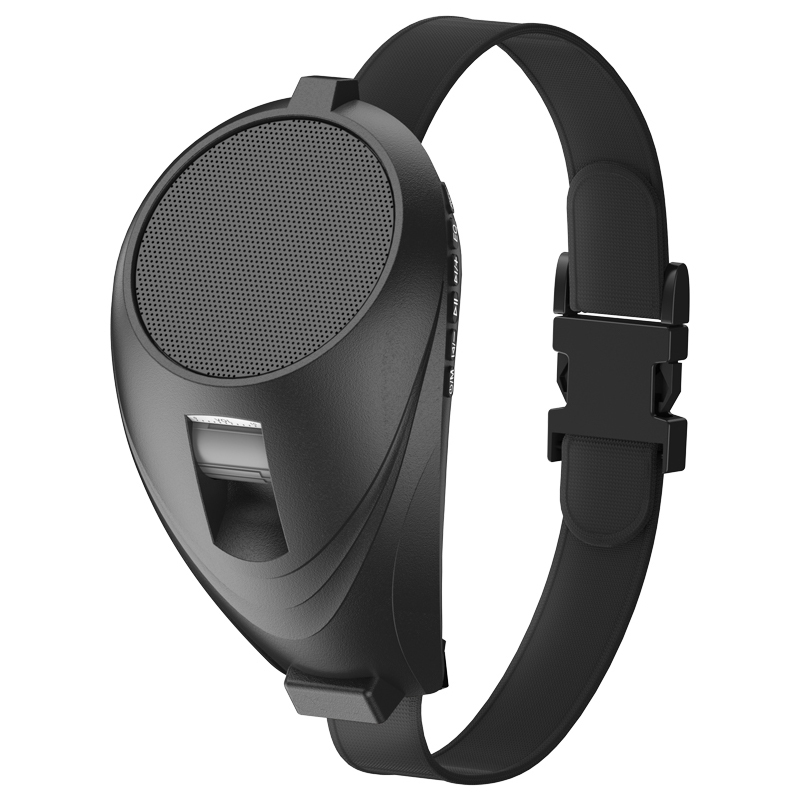
Active 5.0 Plastic Mini Speaker Super Bass Belt-Mounted Voice Amplifier
5000mAh battery, belt-mounted form factor and stereo sound for teachers who need portable voice reinforcement.
View product details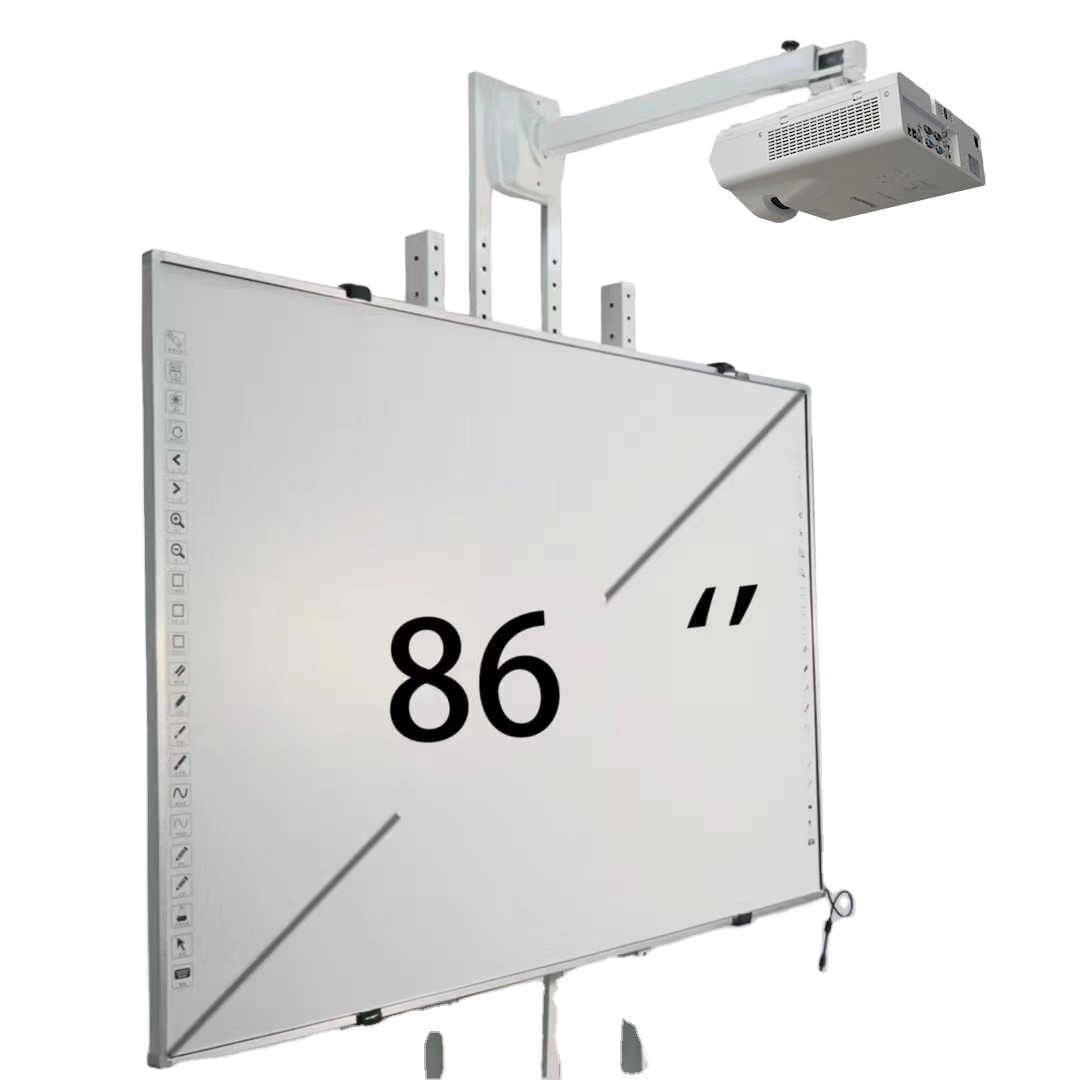
86 Inch Interactive Smart Board for Classroom Use
Dual-system operation, metal and PET construction, 22 shortcuts and finger multi-touch for collaborative K-12 and training rooms.
View product details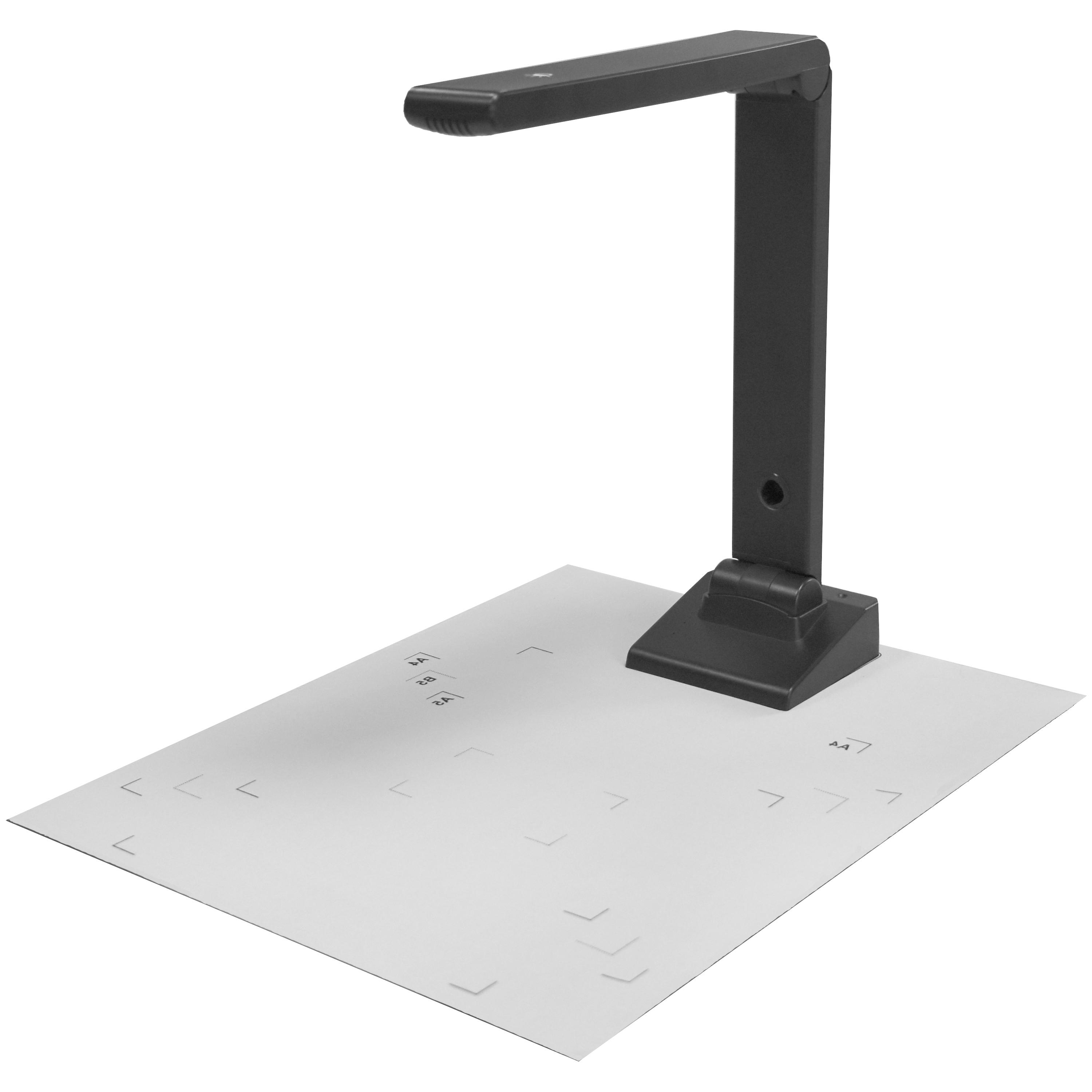
ShenMaiDi 8MP A3/A4 Portable Document Scanner with SDK
CMOS-assisted text conversion, USB plug-and-play, 1-second scan and 24-bit colour depth for book and document digitisation.
View product details
SHENMAIDI MD-S50A 5.25-Inch Wall-Mount Classroom Speaker System
50W/100W wireless microphone integration, stereo subwoofer output and wall-mount installation for fixed teaching stations.
View product details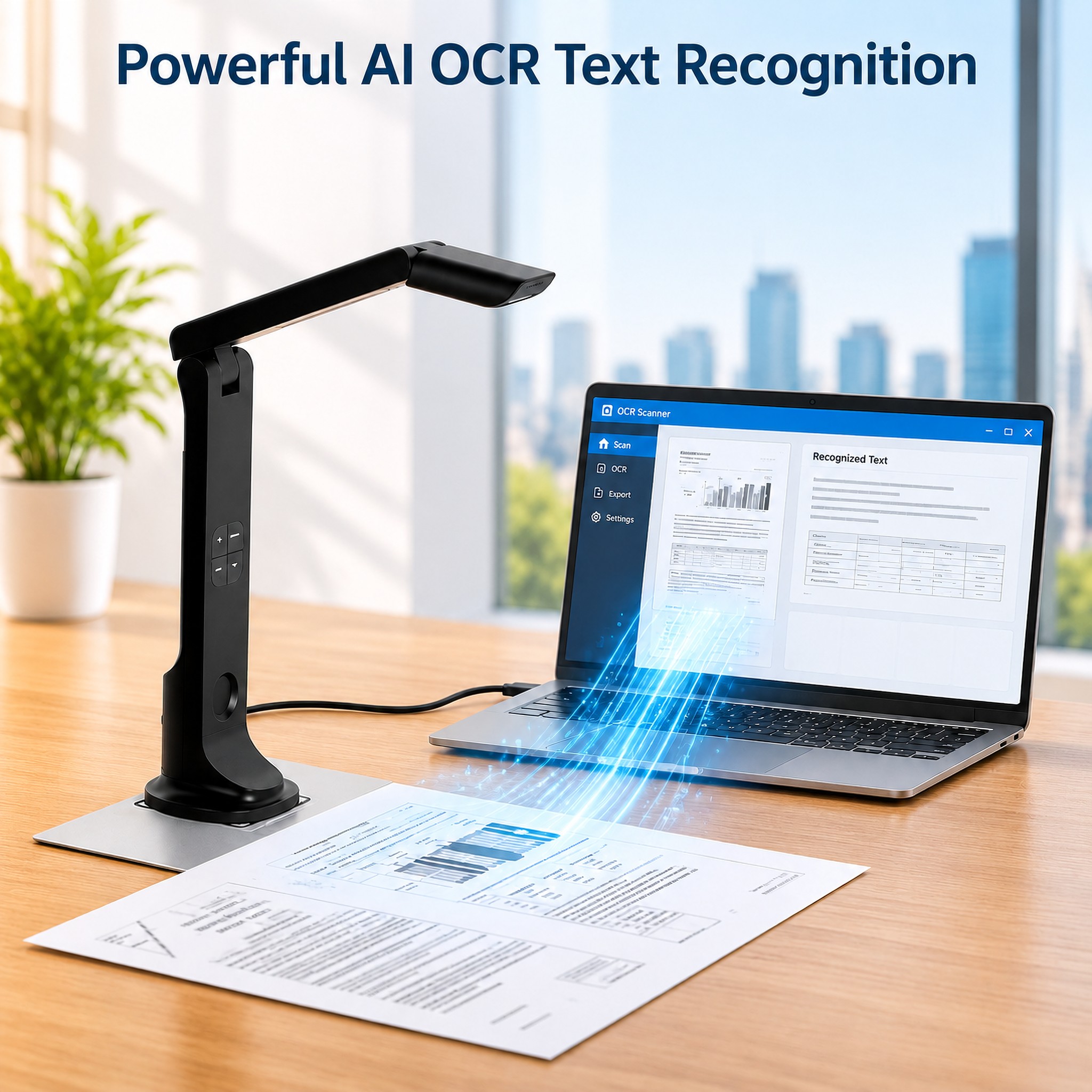
MD-16MT A3 Foldable Document Scanner with 16MP CMOS and OCR
16MP A3 capture, LED fill light, OCR text recognition and USB visual presenter workflow for teaching and paper-to-digital conversion.
View product details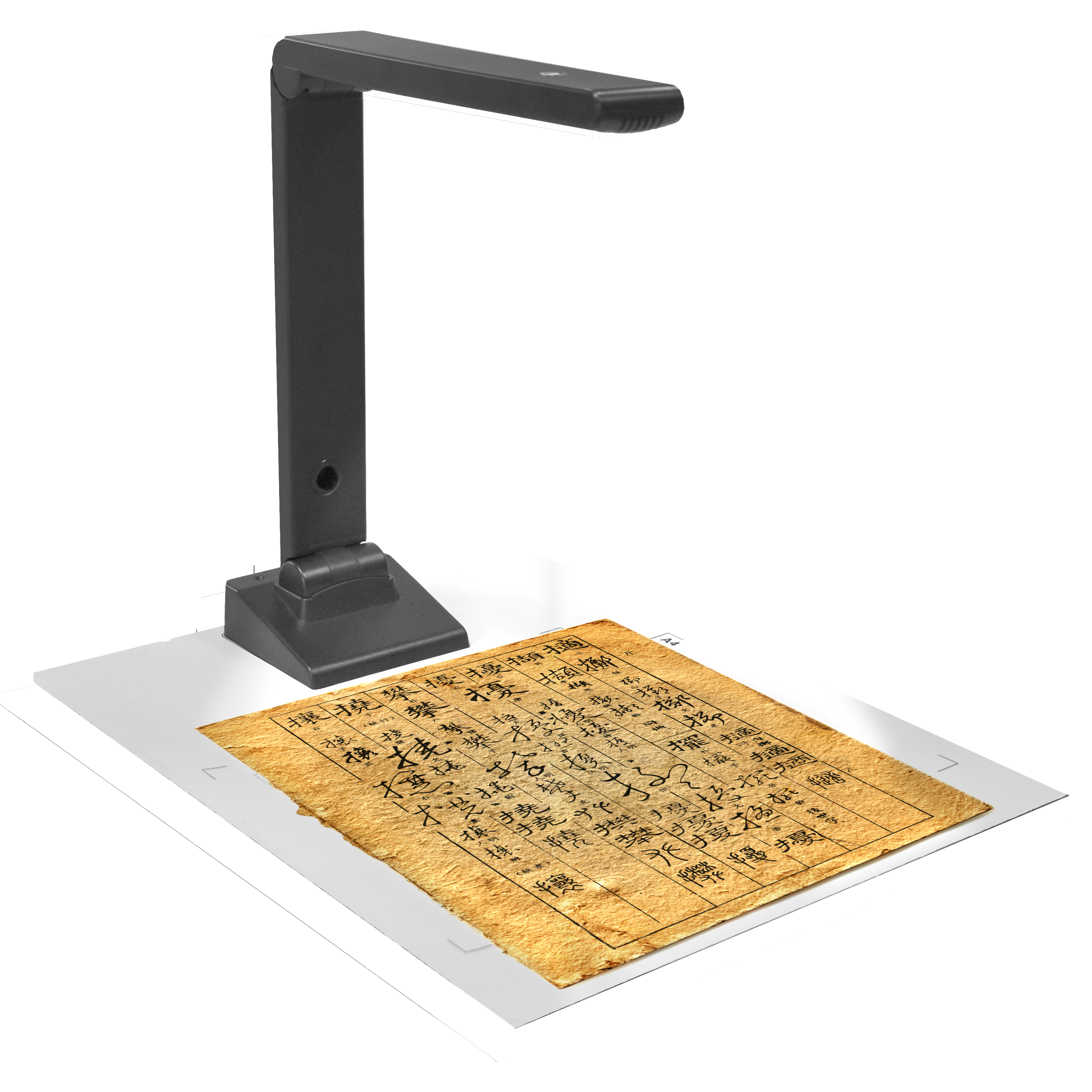
8MP Portable Foldable Document Camera and Book Scanner
USB document camera with LED light, OCR support and classroom demonstration workflow for visual teaching and remote presentation.
View product details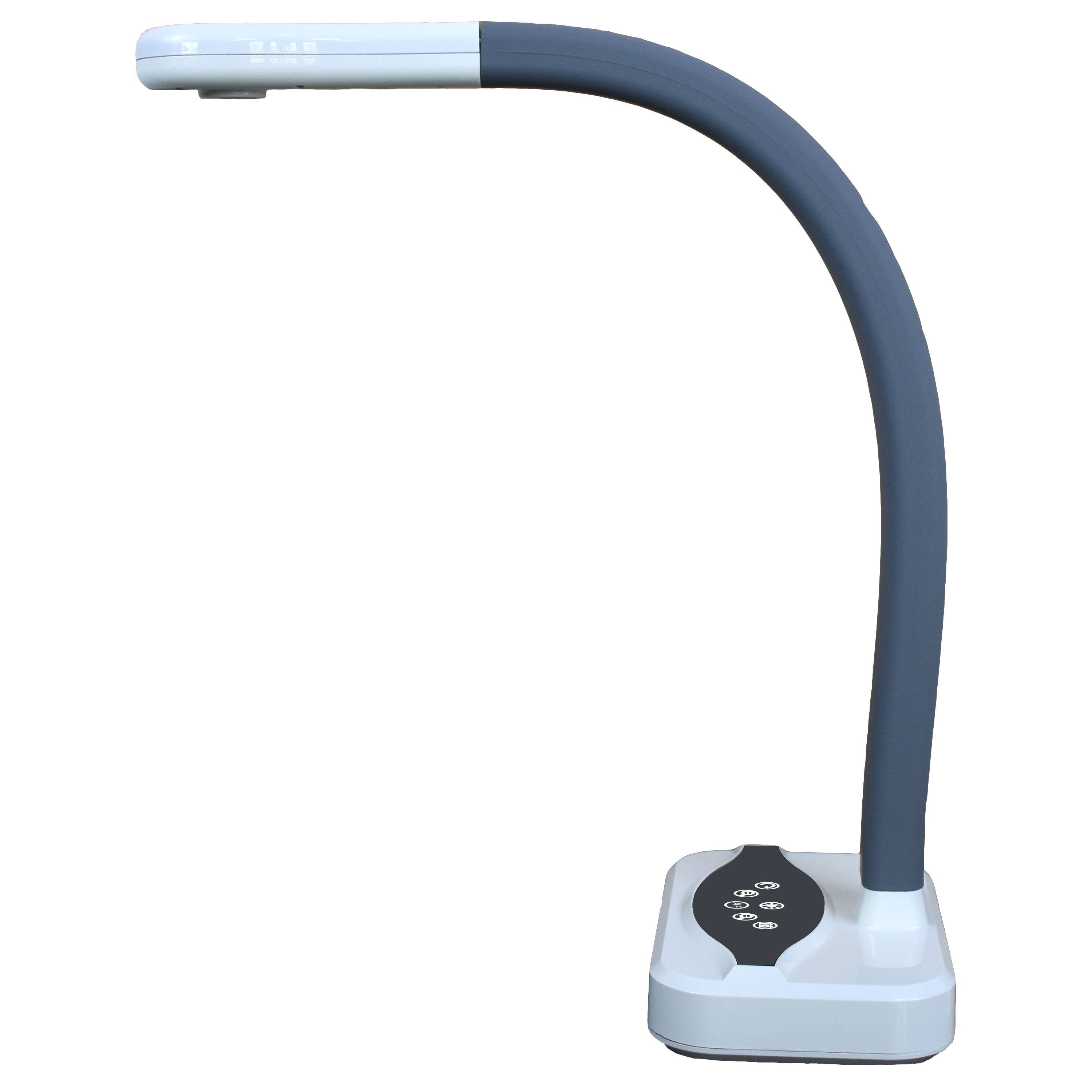
ShenMaiDi 13MP White Foldable Document Camera Scanner
13MP CMOS, A3/A4 capture, 1-second scanning, SDK support and a foldable body for classroom video presentation.
View product detailsHow to Specify a Custom OEM Book Camera Without Overbuying
The right specification starts with the teaching or scanning workflow, not with the highest megapixel number. Use the comparison below to align capture area, interface, OCR and software support before you request samples.
| Project type | Recommended configuration | Why it works |
|---|---|---|
| Daily classroom display | 8MP–13MP foldable USB book camera with LED light and A3/A4 capture | Fast plug-and-play teaching, document sharing and remote lesson capture. |
| Book digitisation | 16MP A3 foldable document scanner with OCR and 1-second scan | Higher resolution, text recognition and a wider capture area for books and paper records. |
| Software integration | USB book camera with SDK, CMOS sensor and stable UVC output | Easier integration with library systems, scanning software and custom kiosk applications. |
| Tender bundle | Book camera + 86-inch interactive board + 50W speaker + wall-mount classroom audio | One supplier for core classroom AV reduces BOM complexity and after-sales handover risk. |
Five checks before you approve a custom OEM sample
- Confirm A3 or A4 capture area and test real books with curved pages, not only flat paper.
- Verify USB, HDMI, Type-C or SD-card workflow depending on whether teachers present with or without a PC.
- Request OCR and SDK demonstrations if your software team needs text extraction or camera control.
- Approve logo, packaging, buyer-label cartons and firmware version before mass production.
- Collect CE, quality-management and SGS assessment evidence required by your tender or distributor.
For education buyers, the most common mistake is treating a book camera as a simple webcam. A production-ready custom OEM model needs consistent focus across an A3 page, even illumination, low image noise, stable colour reproduction and a firmware path that can be supported after installation. For integrators, the priority shifts to USB UVC compatibility, SDK access, OCR quality and long-term firmware control. For distributors, the winning combination is usually a compact model range, private-label packaging, clear warranty terms and dependable export documentation. The eight models shown above provide a practical starting point for all three buying patterns.
What Book Camera Buyers Will Prioritise in 2026–2030
Procurement teams are moving away from isolated device purchases and toward evidence-based, bundle-ready sourcing. The following trends are already visible in education tenders, AV distribution and software-integration projects.
Tender Language Becomes More Specific
Buyers increasingly ask for “book camera + OCR + SDK” instead of a generic document camera. Specifications now include capture speed, text recognition, illumination control, UVC compatibility and firmware update policy. Suppliers that can document these points clearly will have an advantage in technical evaluation.
Bundle Procurement Replaces Single-Item Buying
Schools and integrators prefer one supplier for the book camera, interactive whiteboard, classroom speaker and conference camera. A consolidated BOM reduces freight complexity, simplifies warranty administration and shortens installation handover. This favours manufacturers with a coherent product range rather than a narrow single-category catalogue.
Compliance Evidence Becomes Non-Negotiable
SGS onsite assessment, CE certification, quality-management certification and a clear 1-year warranty are now routine screening points. Buyers want to see factory evidence before sample approval, especially for government-funded education projects and distributor onboarding.
Hybrid Learning Demands Plug-and-Play Reliability
Teachers need cameras that work immediately with video-conferencing and classroom software. USB UVC output, stable drivers, built-in microphones and simple LED controls matter more than complex menus. Procurement teams increasingly test a full lesson workflow rather than a single product demonstration.
Private Label and Trial Orders Grow
Distributors want to test demand before committing to large inventory. Flexible MOQs, buyer-label packaging, logo printing and sample orders from selected models make it easier to validate a market. This trend rewards factories with in-house firmware and packing control.
Total Cost and Serviceability Matter More
Purchase price is only one part of the decision. Buyers now evaluate spare-part support, firmware maintenance, packaging durability, warranty response and ease of field replacement. A book camera that can be supported for years is often more valuable than a lower-cost unit with unclear service backing.
Where Book Camera and Visual Presenter Technology Is Moving
Hardware is converging with software. The next generation of book cameras will be judged less by megapixels alone and more by image intelligence, interoperability, serviceability and the quality of the complete classroom or meeting-room experience.
4K Capture and Better Low-Light Performance
Higher resolution remains valuable for large-format books, detailed diagrams and remote viewers. At the same time, buyers are paying more attention to sensor quality, noise control and lens design. A clean 13MP or 16MP image can outperform a poorly tuned higher-resolution camera in real classroom lighting.
AI-Assisted OCR and Book-Curve Correction
Text recognition is moving from desktop software into the capture workflow. Future models will increasingly support automatic page-edge detection, curvature compensation, shadow reduction and export-ready PDF or text output. For OEM buyers, the key question is how much processing happens in the camera, the PC software or the customer’s own application.
SDK, API and UVC Interoperability
Integrators want cameras to behave as predictable imaging modules. UVC compliance, SDK access, image-control APIs and stable device identification are becoming standard expectations. This is especially important for library scanning, government counters, telemedicine, insurance documentation and custom kiosk deployments.
Modular and Space-Saving Hardware
Foldable desktop cameras remain popular, but wall-mounted and fixed-installation formats are growing in lecture rooms and training centres. Modular arms, standard mounting points, LED modules and replaceable cables can reduce maintenance costs and extend product life in daily school use.
Integrated Visual and Audio Room Systems
A book camera is increasingly purchased alongside interactive displays, conference cameras and classroom speakers. Product development is therefore moving toward complete room solutions that share installation standards, accessories and support processes. This reduces the number of suppliers a project team must manage.
Sustainability, Packaging and Repairability
Education buyers are beginning to ask about packaging waste, spare-part availability and product lifespan. Practical improvements include stronger recycled cartons, clearer model labels, replaceable power adapters and firmware support that avoids premature replacement. These are no longer marketing extras; they are procurement considerations.
Why Custom OEM Buyers Work With Kawelo
Shenzhen Kawelo Electronic Technology Co., Ltd. is a manufacturer with an integrated trading function, founded in 2019 near the Guangming Science City high-tech park. Our founder has 18 years of experience in visualisers, cameras and teaching equipment, and that experience is applied from chip-level solution selection through firmware, assembly and quality control.
In-House Engineering Depth
R&D, imaging and sensing algorithm work, firmware flashing and audio tuning are handled in-house. This allows OEM buyers to discuss real technical requirements instead of receiving generic catalogue answers.
OEM, ODM and Buyer Label
Logo printing, custom packaging, graphic customisation and buyer-label production are available. Firmware is flashed and verified on dedicated burning stations before assembly is completed.
Verified Production Base
The production site in Dongguan, Guangdong has been assessed onsite by SGS. The company is quality-management certified, and the document camera range carries CE certification.
Flexible Order Strategy
MOQ depends on the model: selected document cameras and conference cameras start from 1 piece, most webcams and document cameras from 4 to 5 pieces, and interactive whiteboards typically from 30 pieces.
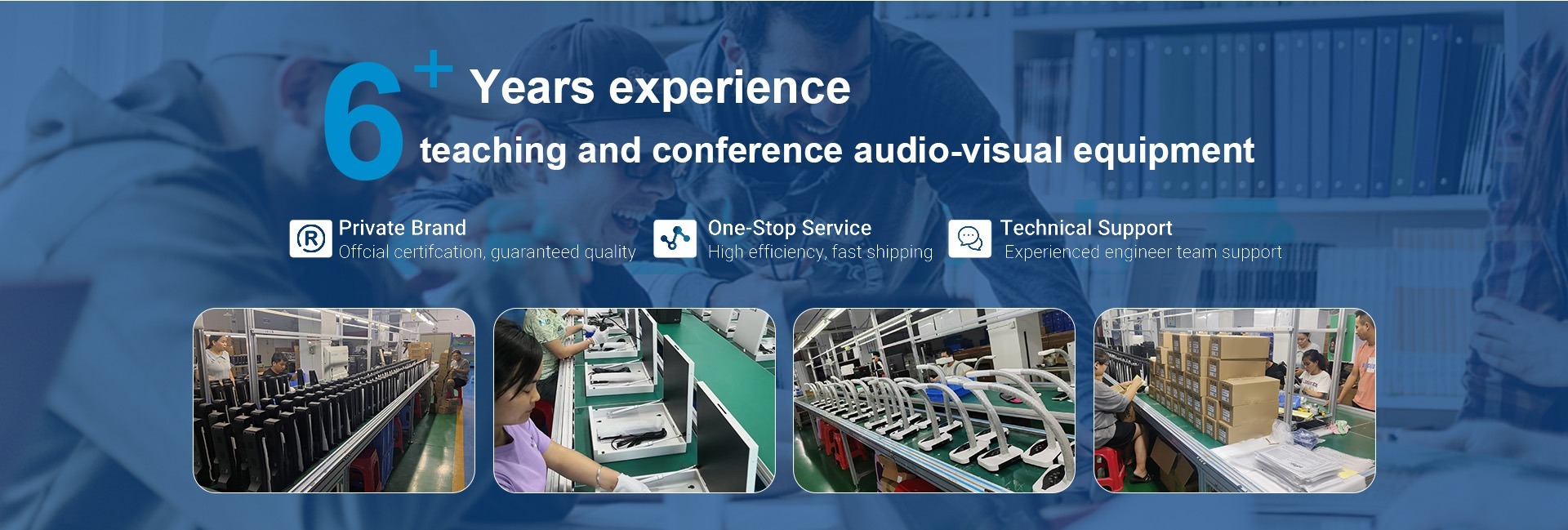
Production, R&D, firmware, assembly, QC and packing are managed in-house.
Inside the Factory: What Your OEM Order Goes Through
Every unit follows a documented production route. The process below reflects the operating model described by the factory: incoming material control, cleaning, firmware burning, assembly, quality testing and export packing.
Raw Material Check
Incoming parts are checked against the BOM before release to production, reducing mismatch risk before assembly begins.
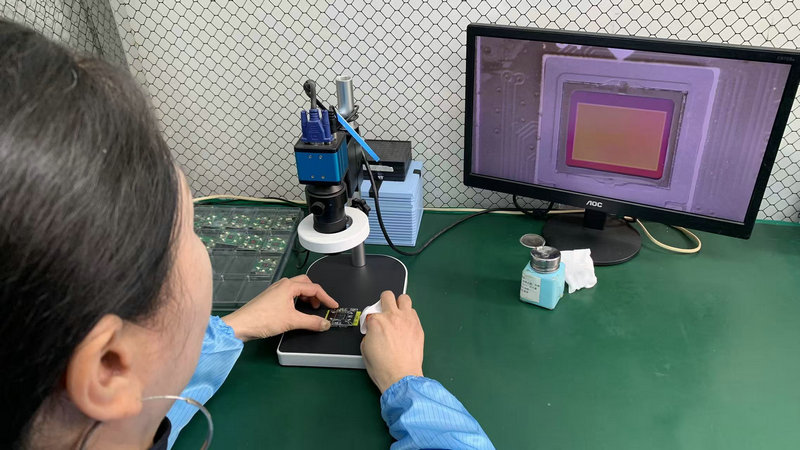
Lens and Sensor Cleaning
Lens and sensor areas are cleaned to prevent image specks, haze and avoidable rework during final inspection.
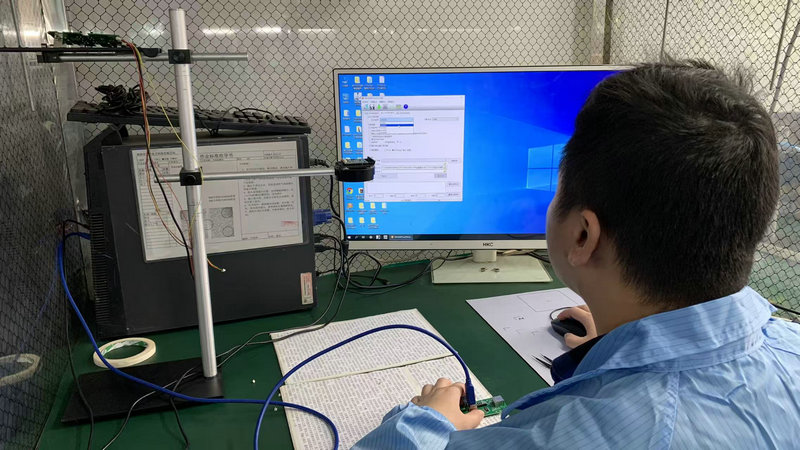
Firmware Burning
Standard or customer-specific firmware is flashed and verified on dedicated burning stations for OEM/ODM orders.
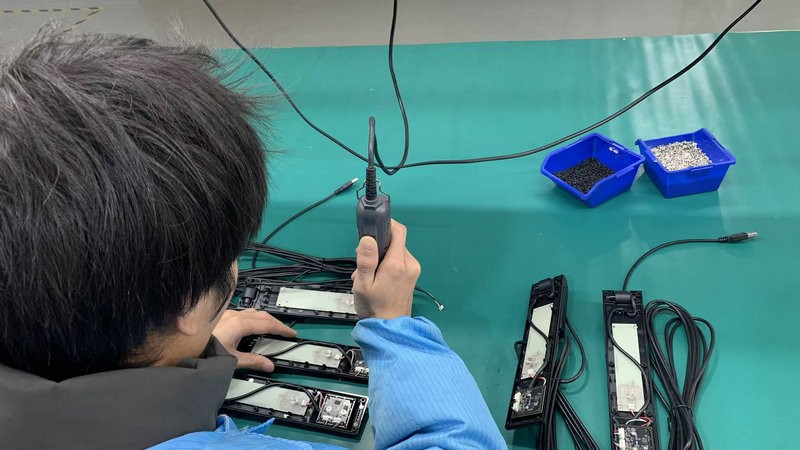
Assembly
Mechanical and electronic assembly is completed on dedicated lines, with buyer-label and packaging requirements controlled through production.
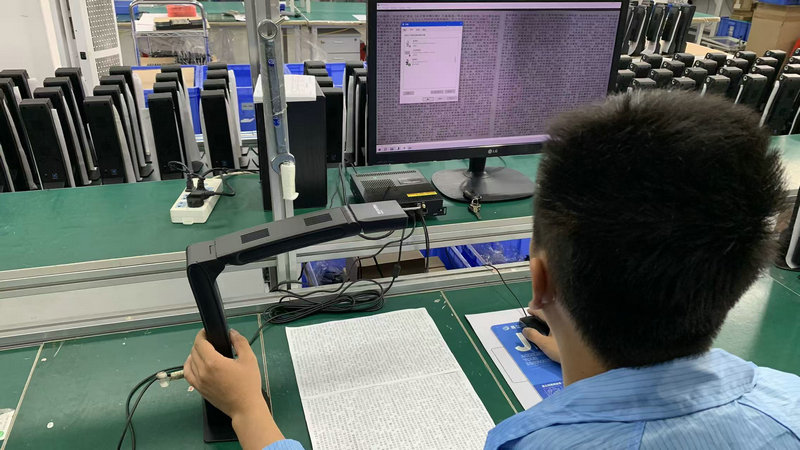
Quality Control
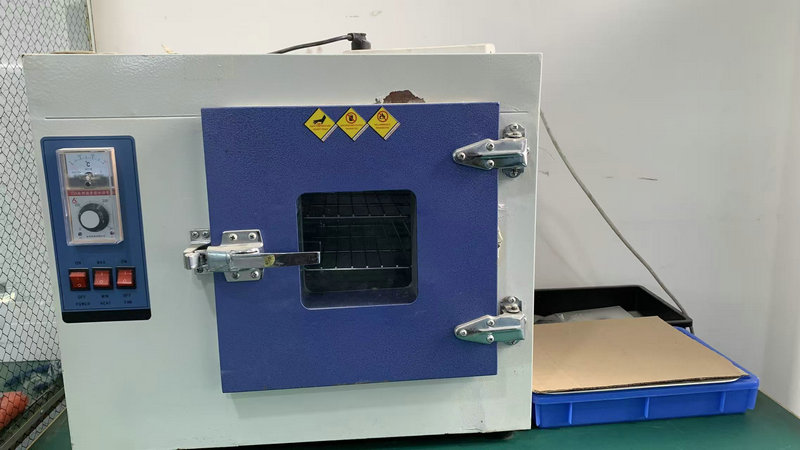
Image, audio and function tests are performed on finished units to identify issues before packing and shipment.
Export Packing
Export packing is completed with optional buyer-label cartons, supporting distributor and tender delivery requirements.
Answers for Overseas OEM Book Camera Buyers
These are the questions procurement teams, distributors and integrators ask most often before placing a first order. If your project requires a datasheet, certification file or sample arrangement, send the specification through the contact button below.
Is Kawelo a manufacturer or a trading company?
We are a manufacturer with an integrated trading function. Our production site in Dongguan, Guangdong has been assessed onsite by SGS, and R&D, firmware, assembly, QC and packing are handled in-house.
What OEM and ODM customisation do you offer?
We offer OEM service, design service and buyer-label production, including logo printing, custom packaging and graphic customisation. Firmware is flashed and verified in-house on dedicated burning stations.
What is the minimum order quantity?
MOQ depends on the model: selected document cameras and conference cameras start from 1 piece, most webcams and document cameras from 4 to 5 pieces, and interactive whiteboards typically from 30 pieces.
Which certifications do your products and factory hold?
Our document camera range carries CE certification, the company is quality-management certified, and our factory has passed an onsite supplier assessment by SGS Group.
Do your book cameras support SDK and OCR integration?
Yes. Selected models such as the A4/A3 high-speed document camera ship with SDK support, and the MD-16MT A3 scanner provides OCR text recognition. Please confirm the exact firmware and SDK requirement for your software platform.
What payment and delivery terms do you accept?
We accept T/T payment in USD or HKD and quote on FOB terms. Final shipping and documentation requirements can be confirmed with the sales team for your destination market.
What warranty do you provide?
Our document cameras come with a standard 1-year warranty. Please contact our sales team for warranty terms on other product categories, including interactive boards, speakers and conference cameras.
Which markets do you export to?
Our main export markets are Southeast Asia, Africa, North America and Oceania. We support OEM buyers, education distributors, system integrators and private-label AV brands in these regions.
How do I choose the right book camera for a tender?
Start with the capture area and workflow. Choose 8MP–13MP USB models for everyday classroom display, 16MP with OCR for book digitisation, and SDK-ready models for software integration. Book cameras can also be bundled with 86-inch interactive boards and 50W classroom speakers for a single-BOM tender package.
Send Your Book Camera Specification and Target Quantity
Include capture area, resolution, interface, SDK/OCR requirement, private-label packaging and delivery market. Our team will reply with model recommendations, datasheets, certification details and sample options. Email: info@kawelotech.com.