8 Production Models for 4K, A3 and Hybrid Classroom Projects
These models reflect the practical mix buyers request most often: 4K visual presenters, 16MP document scanners, PTZ conference cameras and interactive classroom displays. Specifications should be confirmed per order, sample and tender requirement.

ShenMaiDi 4K PTZ Conference Camera with Real-time Translation System
An integrated 4K PTZ camera and audio conference system for online training, hybrid classrooms and remote briefings. A practical recommendation when the project needs camera, audio and translation workflow from one supplier.
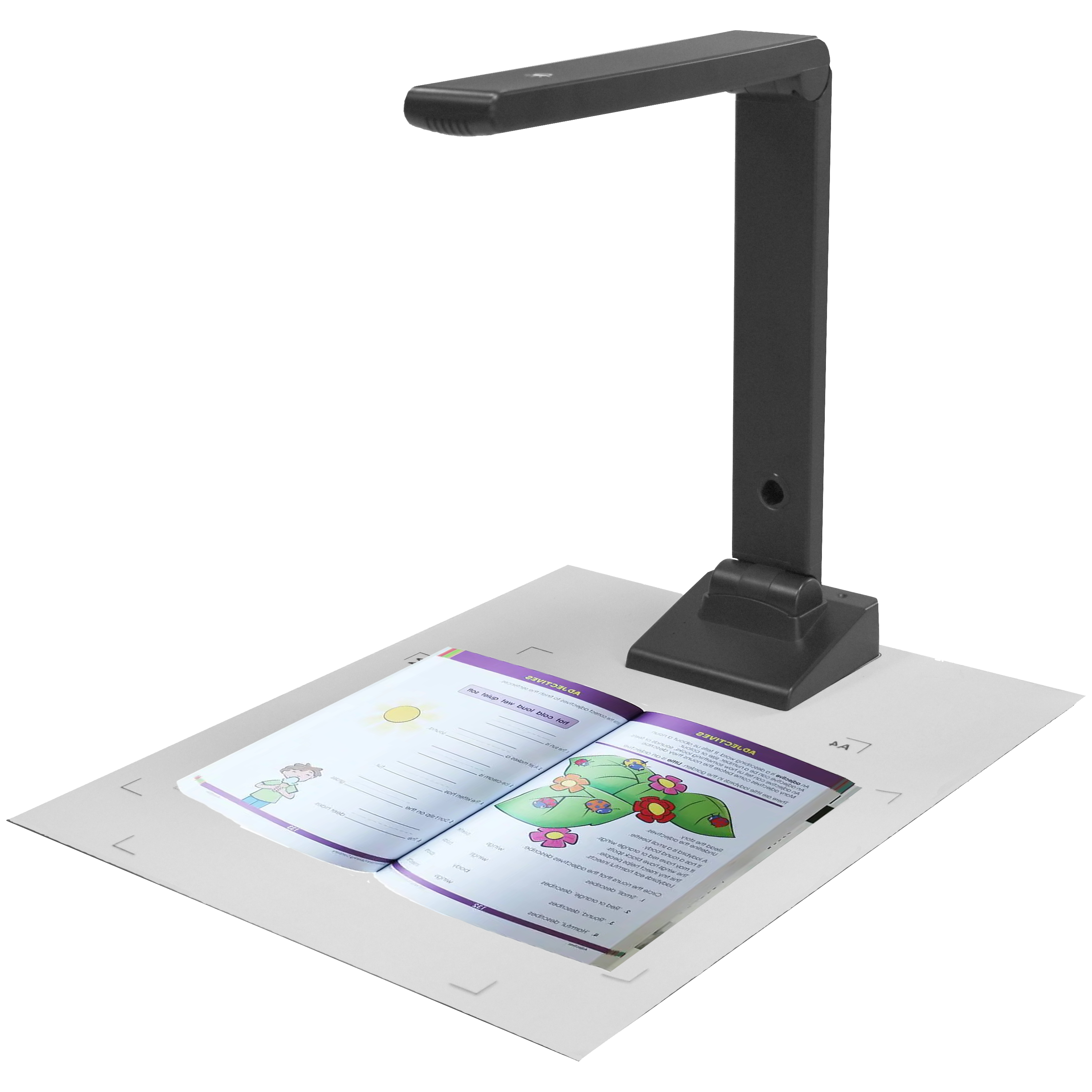
16 MP CMOS Sensor Document Scanner OEM Digital Visualizer
A3 educational visual presenter with auto focus, USB connectivity and OEM-ready construction. Suitable for schools, training rooms and distributors that need a repeatable 16MP document camera platform with buyer-label flexibility.
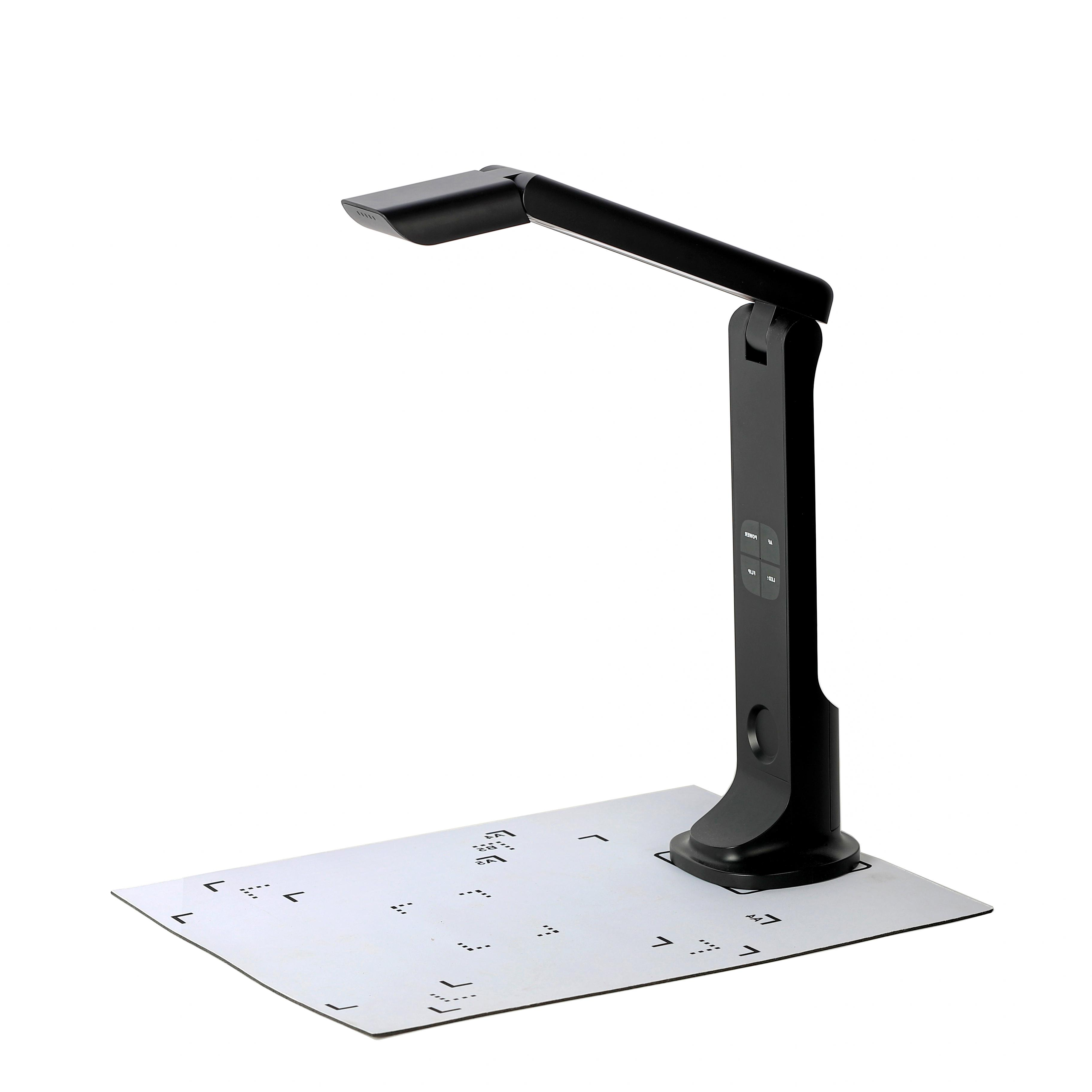
ShenMaiDi MD-13MT A3 Large-Format 13MP Document Scanner
A foldable A3 document scanner with 13MP CMOS imaging, USB output and LED light for teaching, home study and office capture. A budget-conscious option when a project needs reliable page display rather than a full conference-room system.
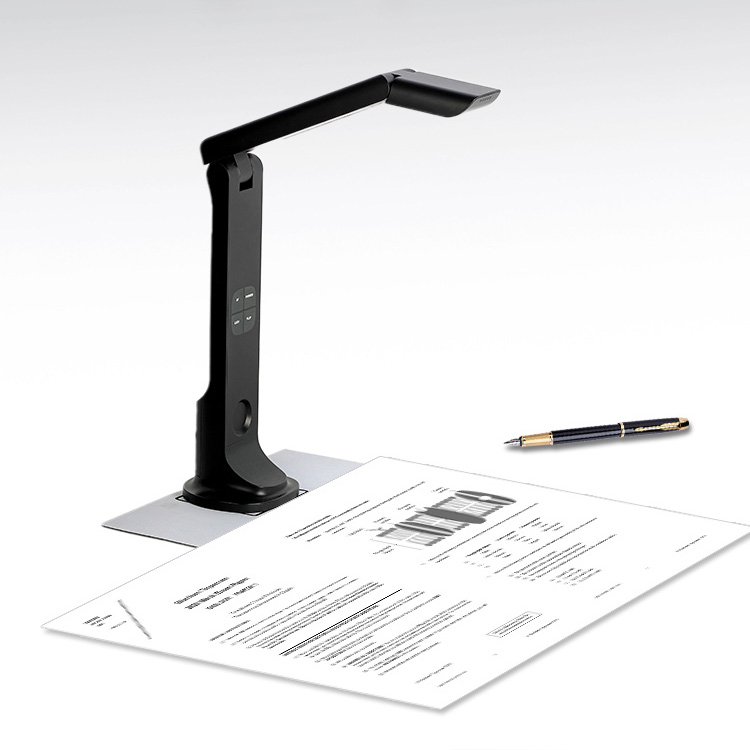
A4/A3 16MP Portable USB Document Camera & Book Scanner
A portable visual presenter for books, worksheets and classroom demonstrations. The 16MP USB design is aimed at kids' education, distance learning and everyday teaching where quick setup and clear text matter more than complex room integration.
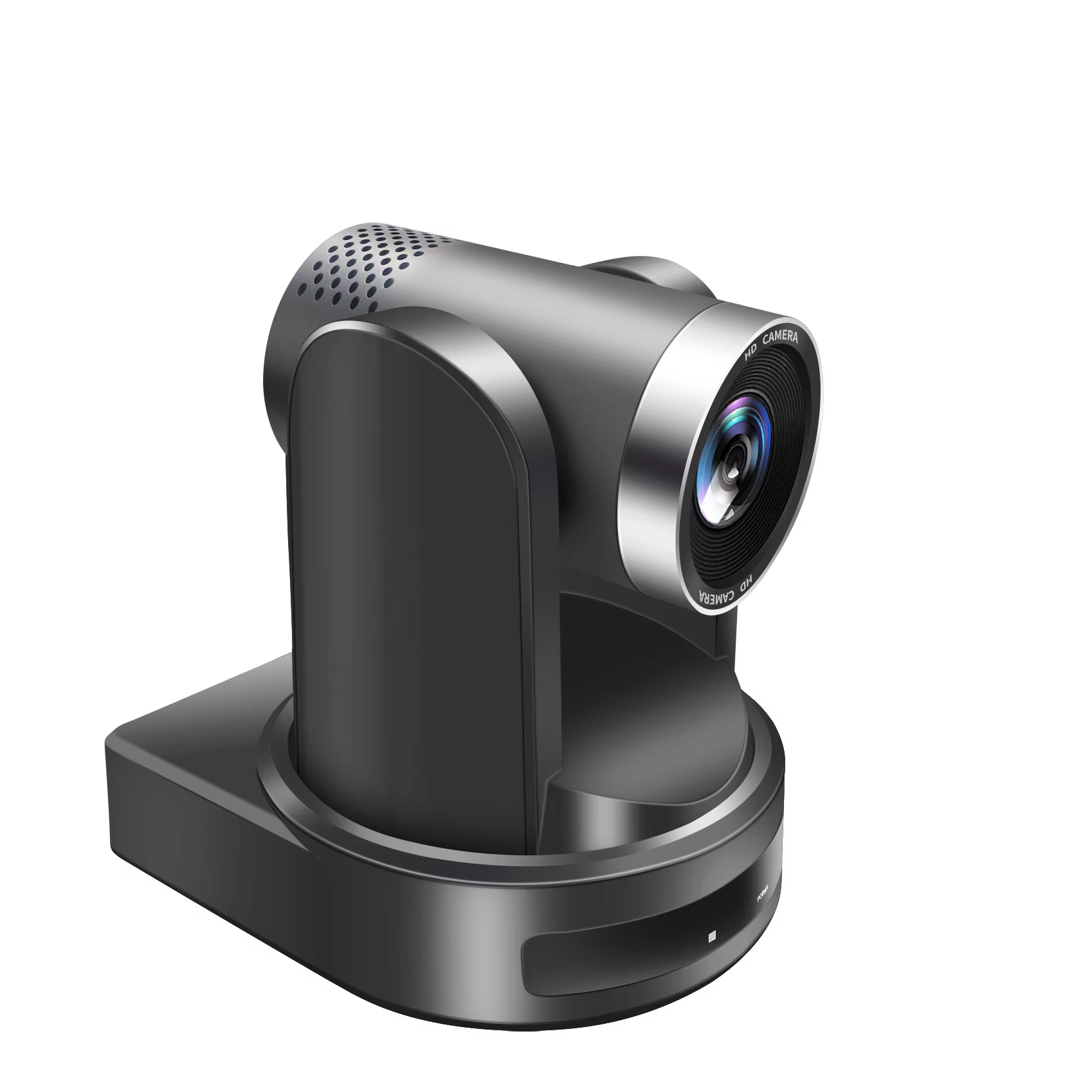
ShenMaiDi Black 4K 10X PTZ Video Conference System
A 4K PTZ conference camera with 10X zoom, face tracking and voting function over USB. Designed for meeting rooms, training suites and remote sessions where participant framing and simple PC connectivity are important procurement criteria.
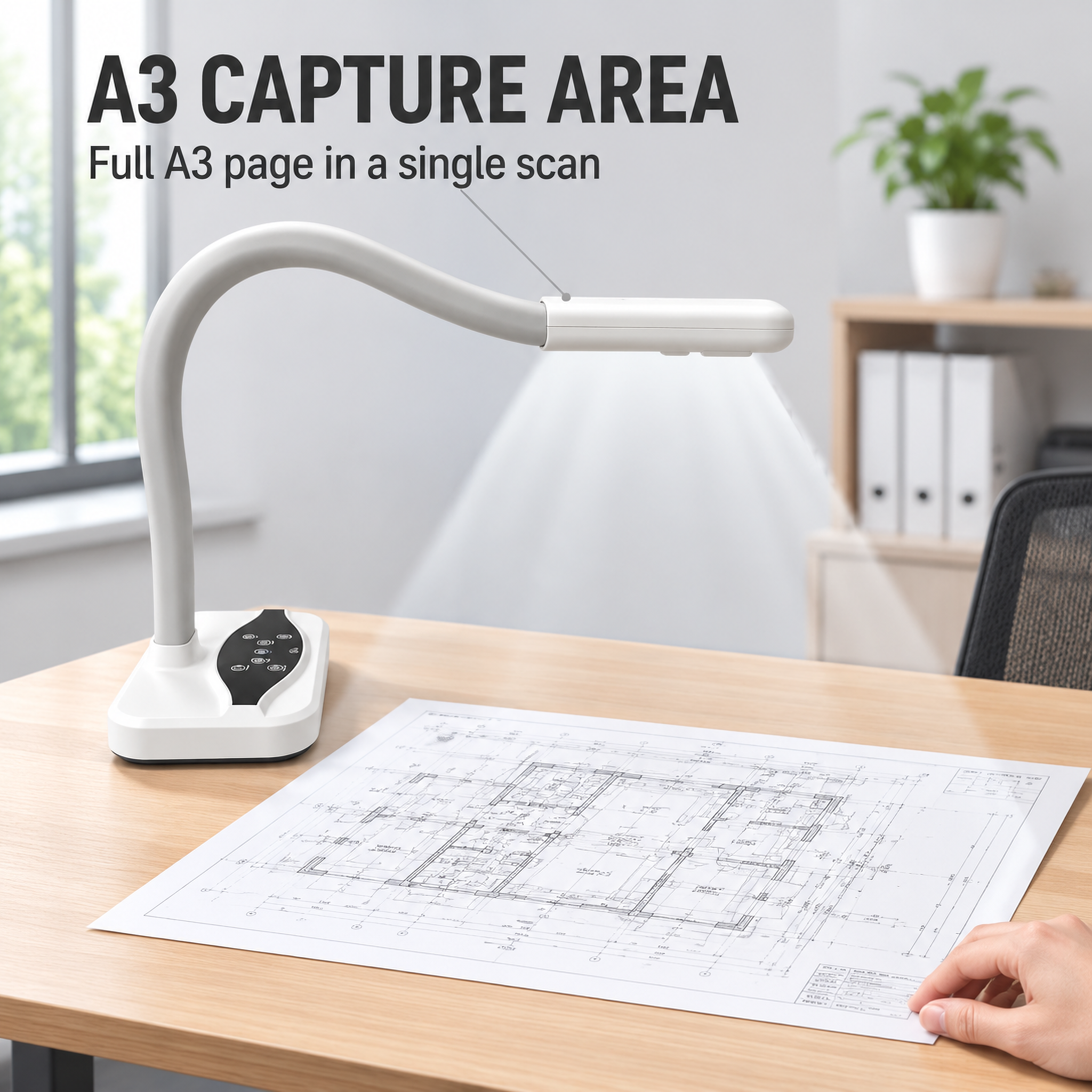
4K HD Document Scanner Visual Presenter with USB & A3 Capture
A 4K HD document scanner and visual presenter for meetings and teaching. The A3 capture area and USB workflow make it a strong shortlist candidate for hybrid classrooms, lecture capture and live document demonstration.
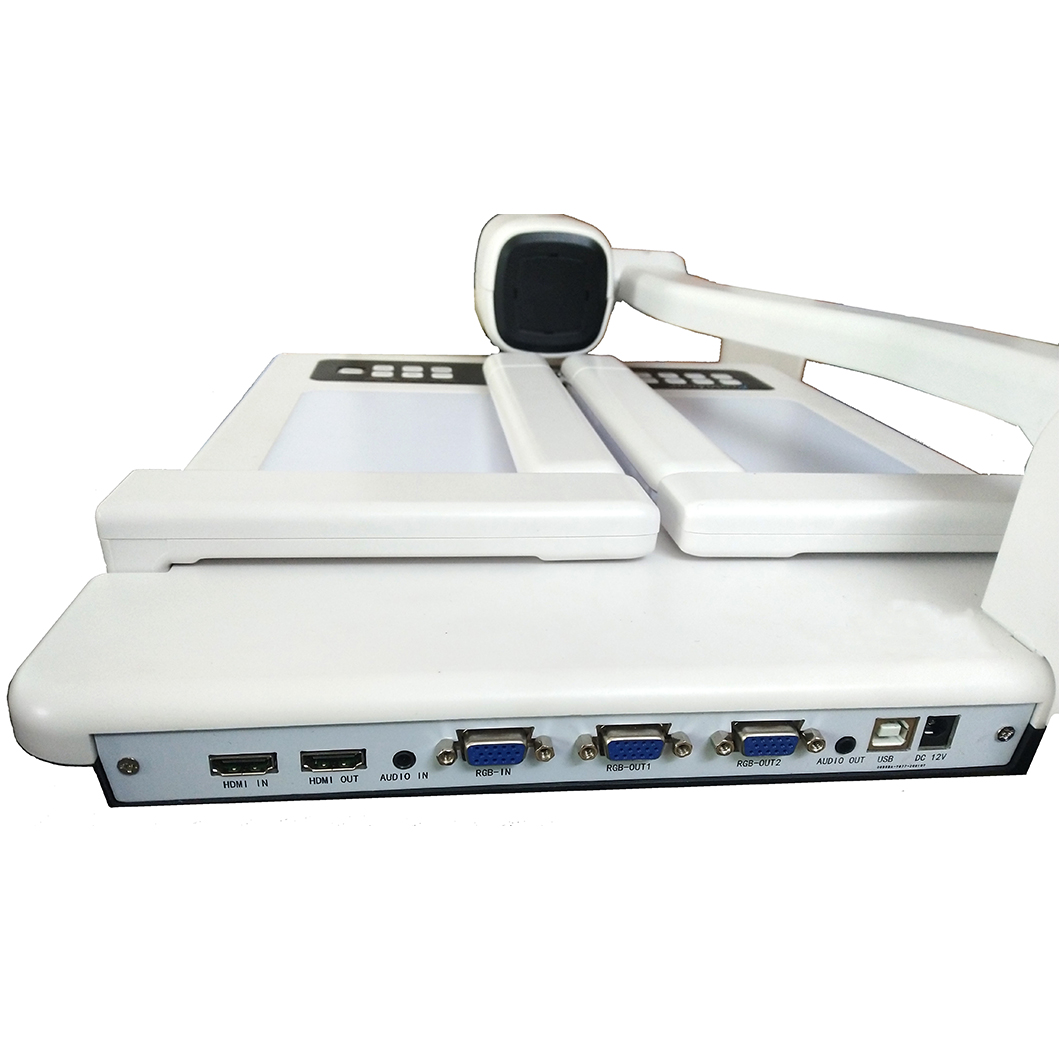
Document Optica 22X Optical Zoom Educational Visual Presenter
An A3/A4 educational visual presenter with 22X optical zoom and adjustable LED lighting. Recommended when the camera must show fine detail, small parts or distant whiteboard content in a smart classroom or demonstration setting.
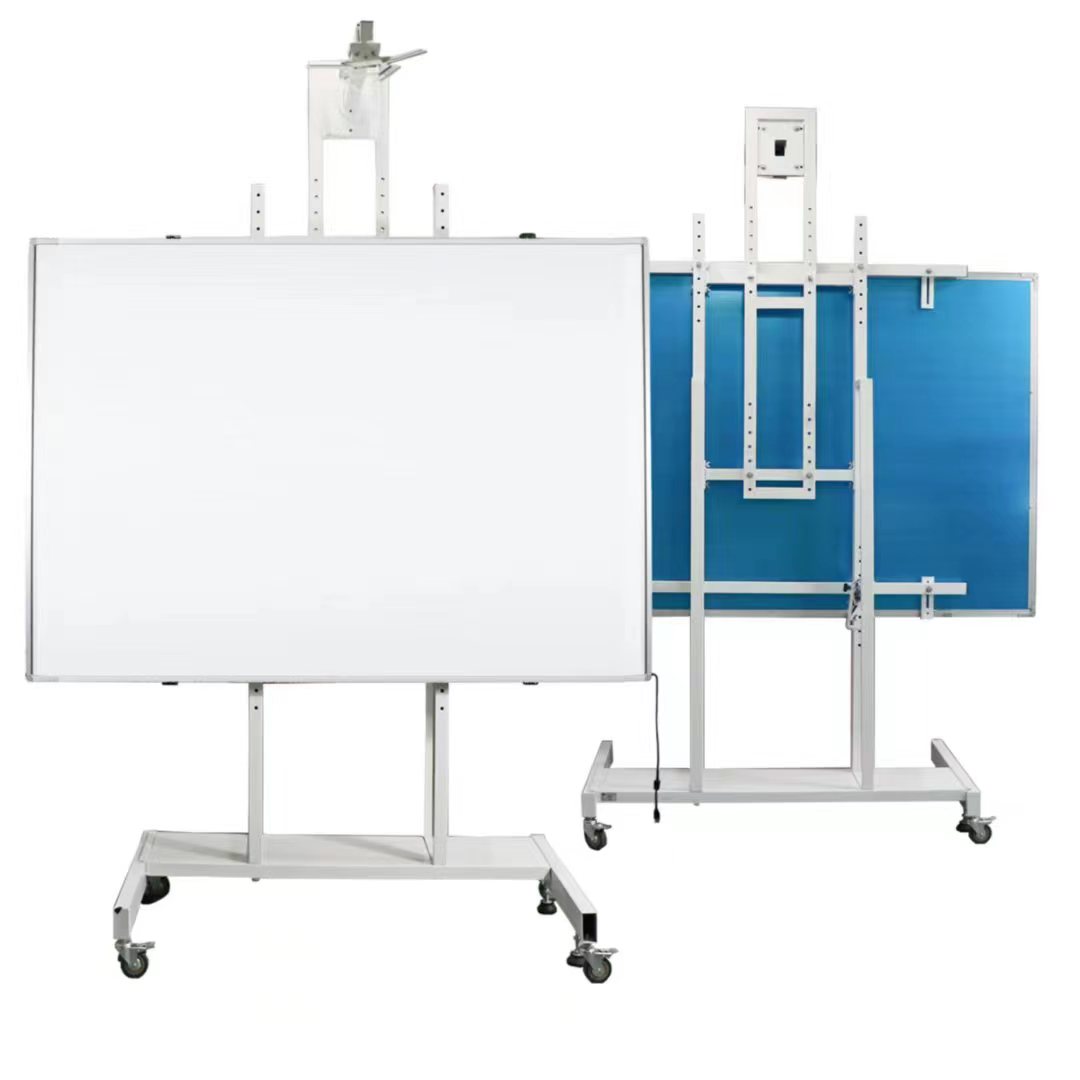
96" Interactive Metal PET Whiteboard Touch Screen
A 96-inch interactive whiteboard for multimedia classrooms and collaborative teaching. When paired with a 4K document camera, it creates a complete visual teaching station for lesson annotation, live capture and group presentation.
Manufacturing and Export Signals Buyers Can Verify
For B2B sourcing, trust should be supported by evidence. These signals reflect the company profile and production base behind the products shown above.
What 4K Document Camera Buyers Are Really Specifying Now
The product category has shifted from “a camera on a stand” to a visual capture node inside hybrid classrooms, meeting rooms and digital document workflows. That shift changes how suppliers should be evaluated.
The phrase 4K document camera is now common in tender documents, but the specification behind it is not standardised. A true 4K visual presenter must combine a native 4K sensor, a lens that resolves detail across an A3 capture area, stable autofocus, even illumination and an image pipeline that preserves legibility at the edges of a page. Buyers who compare only the resolution label can end up with interpolated output, soft text at A3, or latency that makes live annotation uncomfortable. The better procurement question is not “Is it 4K?” but “Can it deliver readable, colour-consistent, low-latency 4K images over the interfaces our rooms actually use?”
Our export inquiries increasingly come from education distributors, AV integrators and corporate training teams that need one visual capture platform for classrooms, lecture halls, meeting rooms and online sessions. In these projects, a 4K document camera is no longer a standalone accessory. It is part of a room ecosystem that includes an interactive whiteboard, a PTZ conference camera, a speakerphone or audio system, and software for recording, OCR or lesson capture. That is why a supplier able to coordinate imaging, firmware, USB/HDMI connectivity and packaging is more valuable than a catalogue with the lowest unit price.
Hybrid readiness changes the hardware brief. Teachers and trainers want to place a textbook, a worksheet or a product sample under the camera and share it in one action. IT teams want UVC or driver-free USB, predictable HDMI output, secure firmware, simple device management and a warranty path that does not leave a school waiting for a replacement. Procurement teams want spare parts, clear MOQ tiers, buyer-label packaging and documentation for customs and tender committees. These requirements explain why 4K alone is a weak buying criterion.
Total cost of ownership also needs a broader view. A low-cost visual presenter can become expensive if the light source is uneven, the hinge loosens, firmware cannot be updated, or the supplier cannot support SDK integration. A better approach is to score the product on image quality, A3/A4 coverage, autofocus speed, connectivity, OCR/SDK readiness, warranty, spare-part availability and the supplier’s ability to repeat quality across shipments. That is the framework we use when advising buyers on 4K document camera selection.
This is a qualitative buyer-priority map based on common project discussions, not a market forecast or statistical claim.
Where Document Camera Technology Is Heading Next
The next buying cycle will reward suppliers who can show real image performance, software readiness and room-level compatibility—not just a higher resolution number.
Native 4K Optics, Not Just 4K Labels
Visual presenters are moving from upscaled 4K output to true 4K capture with better lenses, larger sensors and smarter tone mapping. The practical test is text legibility at the corners of an A3 page, not only the number on the datasheet. Demand is also rising for higher frame rates and low-latency output so handwriting, science demonstrations and assembly training remain natural on screen.
AI-Assisted Focus, Exposure and OCR
Auto-focus and auto-exposure are becoming baseline expectations. The next layer is AI-assisted page detection, de-warping, text enhancement, handwriting recognition and OCR export to searchable PDF or editable documents. Not every classroom needs these features, but banks, government counters, libraries and software integrators increasingly ask for SDK access so the camera can feed their own capture workflow.
USB-C, HDMI and Wireless Room Integration
Rooms are becoming interface-agnostic. A document camera may connect to a PC by USB, to a projector by HDMI, to a display by Type-C, or to a wireless casting system. Suppliers that design for multiple outputs and driver-free UVC reduce installation risk. For tender projects, ask for the exact supported resolution and frame rate at each output rather than assuming every port carries the same performance.
Ecosystem Compatibility and Manageability
Document cameras are being specified with interactive whiteboards, PTZ conference cameras, USB webcams and classroom audio. The buying trend is toward room kits that are easier to install, support and upgrade. Device labelling, firmware version control, packaging documentation and consistent accessories matter to distributors because they reduce returns and simplify after-sales support.
Four Buying Shifts Reshaping 4K Document Camera Tenders
Public-sector and distributor purchasing teams are moving from “find the cheapest camera” to “prove the camera will perform, integrate and remain supportable.”
From Unit Price to Lifecycle Cost
Buyers now score warranty, firmware stability, spare-part access, installation time and teacher training alongside the quotation. A slightly higher unit price can be justified if it reduces returns, downtime and repeated replacement cycles across a multi-school rollout.
From Generic Catalogue to Evidence
Tender documents increasingly ask for native resolution, autofocus time, output frame rates, illumination details, certificates and warranty terms. Suppliers who can provide sample images, interface charts and packing data are easier to approve than suppliers who only publish a product photo.
From Stock Product to OEM/ODM
Distributors want their own brand, packaging, quick-start guide and, in some cases, firmware behaviour. Buyer-label production is becoming a competitive requirement rather than a premium extra, especially for education channels and regional AV brands.
From One Room to Repeatable Rollout
A single classroom may need one document camera, but a regional deployment needs consistent firmware, packaging, accessories and support documents. Procurement teams are asking suppliers to prove repeatability across batches before awarding a framework agreement.
Tender-Ready Evaluation Checklist
| Evaluation Area | Question to Ask | Evidence to Request | Risk If Skipped |
|---|---|---|---|
| Image quality | Is 4K native, and is text sharp at A3 corners? | A3 sample stills, raw capture file and lighting conditions | Blurry text, uneven brightness and returns after installation |
| Focus and zoom | How fast is autofocus, and is zoom optical or digital? | Lens specification, focus-time test and zoom sample | Delay during live teaching and loss of detail in large rooms |
| Connectivity | Which resolutions are available over USB, HDMI and Type-C? | Interface chart, frame-rate table and latency notes | Room equipment mismatch and unstable hybrid lessons |
| Software readiness | Is OCR or SDK access available for integration? | SDK notes, supported OS list and OCR sample output | Extra development cost and failed software pilots |
| Compliance | Which certificates apply to the exact model? | CE documents, SGS assessment and quality-management evidence | Tender rejection or customs delay |
| Supply and warranty | What are the MOQ, lead time, spare-part and warranty terms? | Written quotation, sample schedule and after-sales policy | Downtime, unclear responsibility and weak repeat orders |
A 4K Document Camera Supplier Built Around Engineering Control
Shenzhen Kawelo Electronic Technology Co., Ltd. combines imaging development, firmware work, assembly and export support in one operating structure. That combination is useful when a buyer needs consistent product, buyer-label packaging and technical answers before a tender deadline.
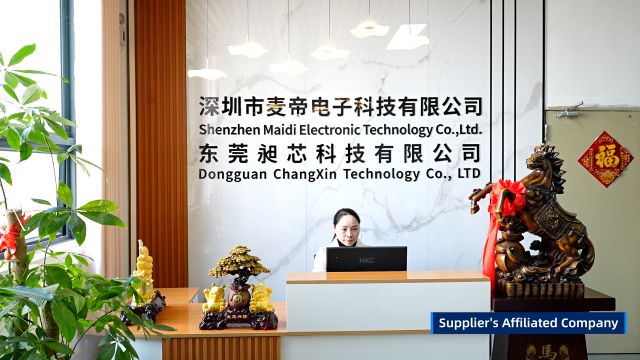
Shenzhen Kawelo Electronic Technology Co., Ltd. is a manufacturer with integrated trading functions, founded in 2019 near the Guangming Science City high-tech park. Our founder has spent 18 years in visualizers, cameras and teaching equipment, and that experience is applied from chip-level solution selection through imaging and sensing algorithms, firmware, audio tuning, assembly and quality control.
Our production base in Dongguan, Guangdong covers up to 3,000 m² and operates with an 11–50 person team. Annual output is in the US$2.5 million–US$5 million range. We handle OEM service, design service and buyer-label production, including logo printing, custom packaging, graphic customisation and in-house firmware flashing on dedicated burning stations.
The factory has passed an onsite supplier assessment by SGS Group and is quality-management certified. Our document camera range carries CE certification. Products are exported mainly to Southeast Asia, Africa, North America and Oceania, with T/T payment in USD or HKD and FOB quotation terms. Selected document cameras and conference cameras can start from one piece for validation, while most webcams and document cameras start from four to five pieces and interactive whiteboards typically from 30 pieces.
For 4K document camera projects, this structure matters. It means the camera, firmware, packaging and after-sales message can be controlled by one team instead of being re-sourced through multiple traders. It also means buyers can ask for model-level evidence—images, interface details, firmware notes, packing data and sample testing—before committing to a tender or private-label launch.
Which 4K Document Camera Configuration Fits Your Project?
Match the use case first, then compare resolution and interfaces. The right model for a primary classroom is not always the right model for a lecture hall, bank counter or conference room.
| Use Case | Recommended Configuration | Why It Fits | Example From This Range |
|---|---|---|---|
| Everyday classroom display | 13–16MP, A3/A4 capture, USB, LED light, auto focus | Simple setup for books, worksheets and object demonstration without a complex room rebuild | ShenMaiDi MD-13MT 13MP A3 scanner; 16MP portable USB document camera |
| Hybrid teaching and recording | Native 4K, USB and HDMI output, stable illumination, low latency | Keeps small text readable on video calls and recording platforms while supporting live annotation | 4K HD Document Scanner Visual Presenter with USB and A3 capture |
| Document digitisation and OCR | 16MP CMOS, OCR-ready workflow, SDK access where required | Useful for libraries, administrative counters and software integrators building capture systems | 16MP CMOS Sensor Document Scanner OEM Digital Visualizer |
| Meeting, training and remote briefing | 4K PTZ, 10X optical zoom, face tracking, USB conference audio | Frames participants and room content while reducing the number of separate AV suppliers | ShenMaiDi 4K 10X PTZ camera; 4K PTZ conference camera with translation system |
| Large classroom and demonstration | 22X optical zoom, A3/A4 coverage, adjustable LED, interactive display pairing | Captures fine detail and small objects; pairs with a large touch display for group teaching | Document Optica 22X optical zoom presenter; 96" interactive metal PET whiteboard |
Common Questions From Overseas Buyers
These answers reflect the company profile, standard product information and export terms. Project-specific requirements should be confirmed in the quotation and sample approval process.
Is Shenzhen Kawelo Electronic Technology a manufacturer or a trading company?
It is a manufacturer with integrated trading functions. The production site in Dongguan, Guangdong has been assessed onsite by SGS, and R&D, firmware, assembly, quality control and packing are handled in-house.
Is 4K resolution enough to judge a document camera?
No. Buyers should compare native sensor resolution, lens quality, A3 corner legibility, autofocus speed, illumination evenness, output latency and supported frame rates over USB or HDMI. A 4K label alone does not guarantee readable text in daily classroom use.
What OEM and ODM customisation do you offer?
OEM service, design service and buyer-label production are available, including logo printing, custom packaging and graphic customisation. Firmware is flashed and verified in-house on dedicated burning stations.
What is the minimum order quantity?
MOQ depends on the model. Selected document cameras and conference cameras start from 1 piece, most webcams and document cameras from 4 to 5 pieces, and interactive whiteboards typically from 30 pieces.
Which certifications do the products and factory hold?
The document camera range carries CE certification, the company is quality-management certified, and the factory has passed an onsite supplier assessment by SGS Group.
Do your document cameras support SDK and OCR integration?
Yes. Selected models such as the A4/A3 high-speed document camera ship with SDK support, and the MD-16MT A3 scanner provides OCR text recognition. Integration requirements should be reviewed before ordering.
What payment and delivery terms are accepted?
T/T payment in USD or HKD is accepted, and quotations are typically issued on FOB terms. Final payment and delivery details are confirmed on the proforma invoice.
What warranty is provided?
Document cameras come with a standard 1-year warranty. Warranty terms for other product categories should be confirmed with the sales team for the exact model and order volume.
Which markets do you export to?
The main export markets are Southeast Asia, Africa, North America and Oceania. Project-specific documentation, packaging and shipping arrangements can be prepared for each destination.
Request a Tender-Ready 4K Document Camera Quotation
Send your target resolution, A3/A4 capture requirement, room quantity, interface needs, OEM artwork and destination country. Our team can recommend matching models, provide product details and arrange sample discussion for your project. Email: info@kawelotech.com