Document Camera Webcam Supplier & Wholesalers Serving Japan
Factory-direct document cameras, visual presenters, scanners, interactive boards and classroom audio for Japanese education, government and enterprise channels — with OEM/ODM support, SGS-assessed production and Japan-ready RFQ documentation.
Eight Proven Models for Education, Office and Public-Sector Projects
Japanese buyers rarely purchase a single catalogue item in isolation. A school upgrade may combine an A3 visual presenter, an interactive board and classroom audio; a corporate project may blend a document camera with USB webcams and conference cameras. The eight products below are in active production and can support tender packs, private-label ranges and pilot orders. Confirm the final SKU, adapter requirement, packaging language and warranty terms before quoting.
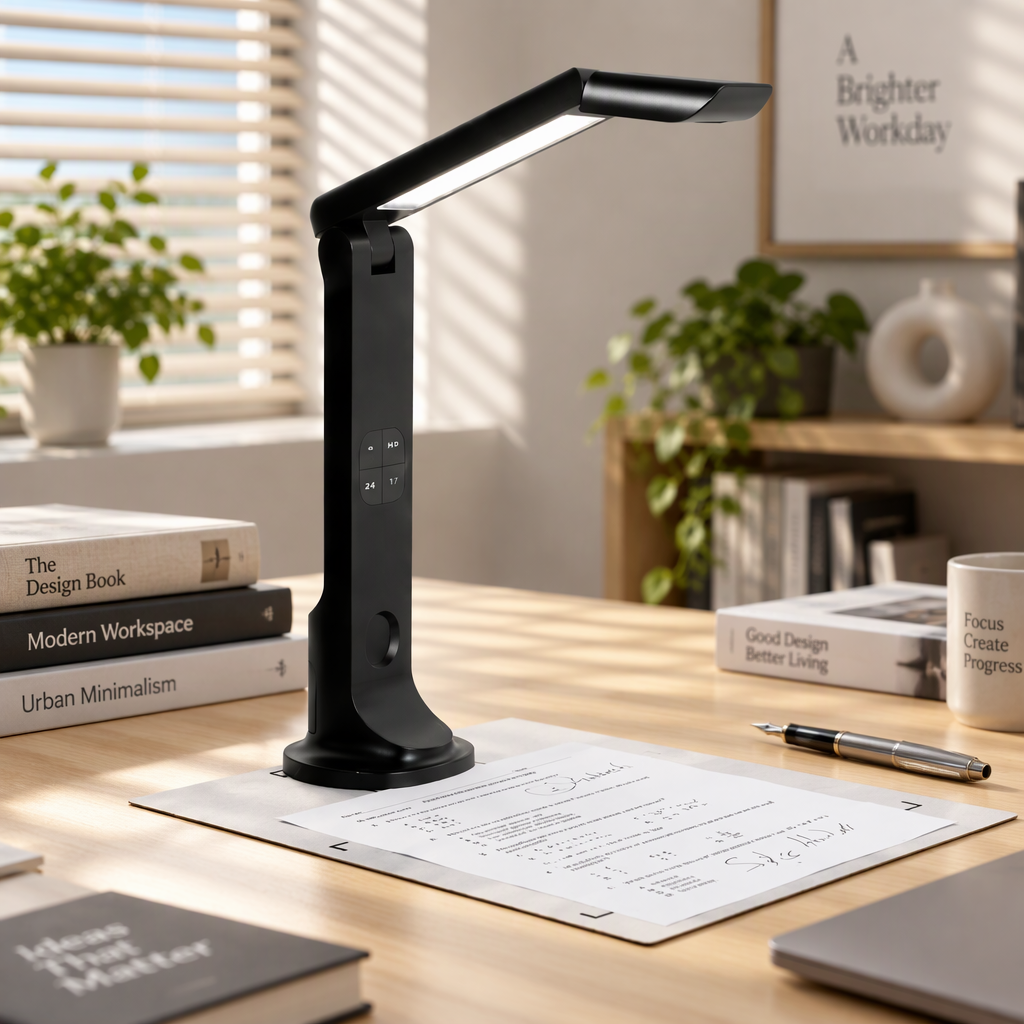
A4/A3 Portable High-Speed USB Document Camera Scanner
Fast A3/A4 capture for classroom display, counter documentation and PC-based scanning. A practical entry model for Japanese wholesale ranges and trial orders.
View product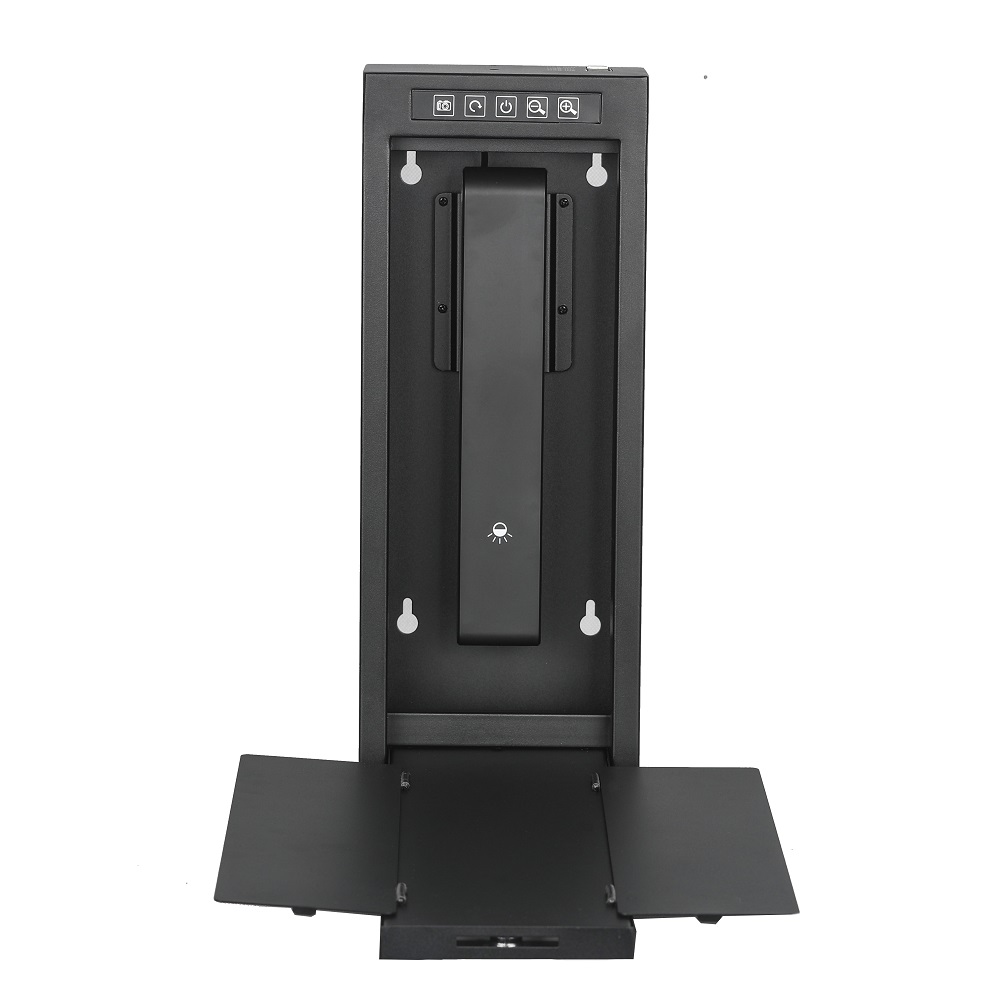
MD-B800H 8MP HD Video Presenter with OCR & Auto Focus
An 8MP auto-focus visualizer with OCR, touch keys and A3 capture for smart classrooms. Suitable for schools and training rooms that need simple, reliable text capture.
View product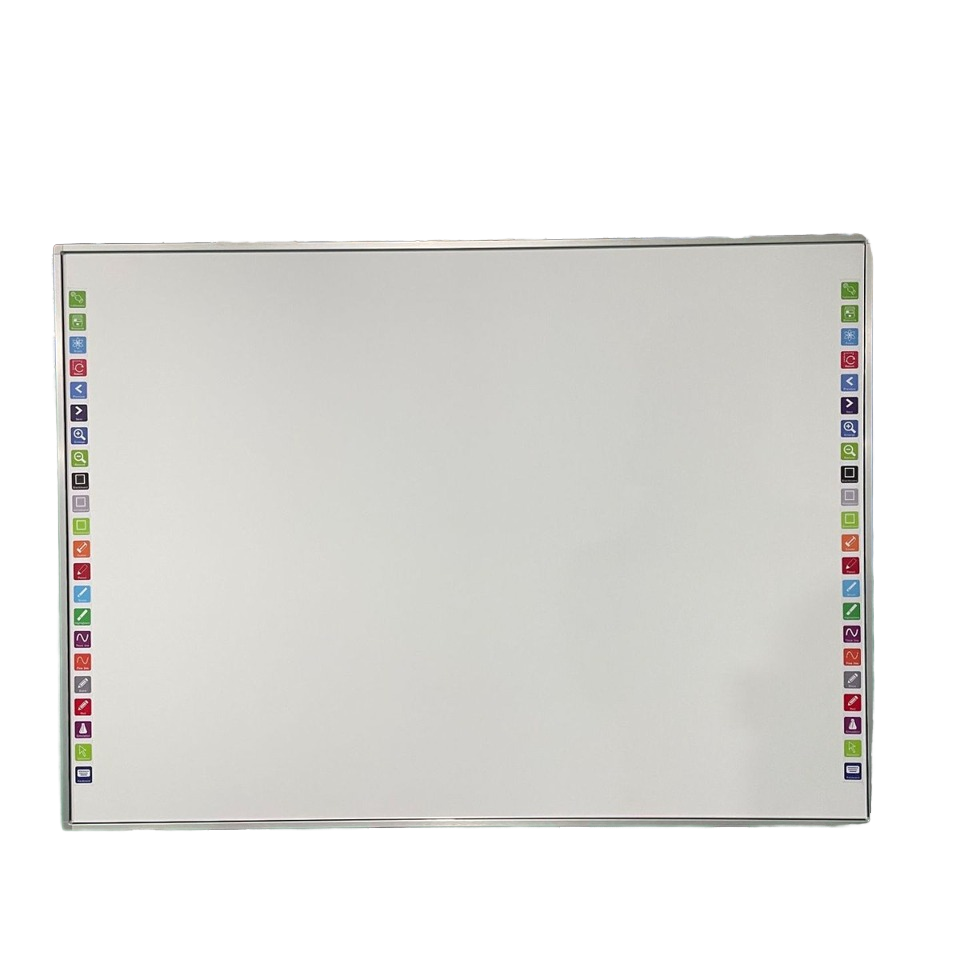
ShenMaiDi 102-Inch Portable Interactive Smart Whiteboard Projector
A 102-inch interactive projection board for lecture halls, training centres and large classrooms. Pair with a short-throw projector for group annotation and shared viewing.
View product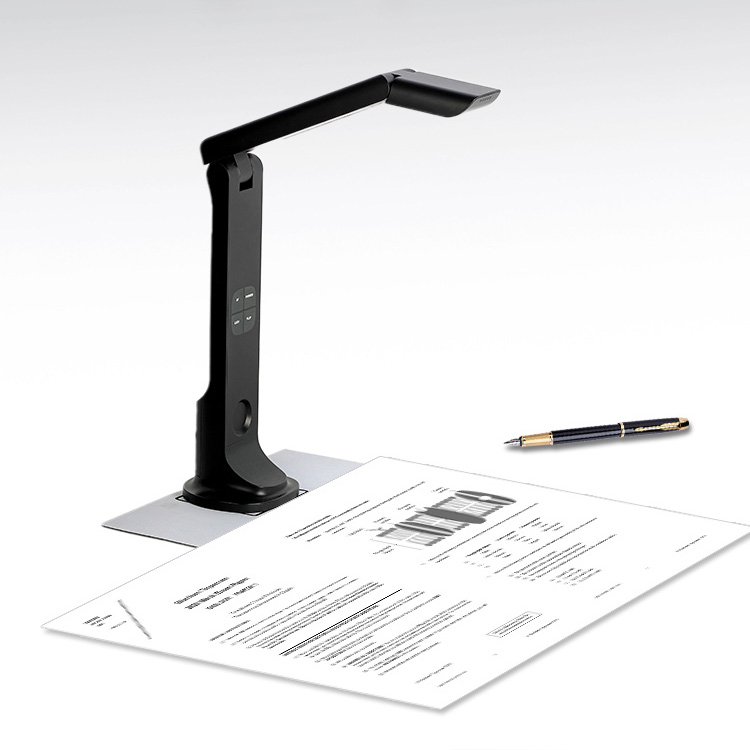
16MP A4/A3 Digital Visualizer Book & Paper Scanner
A 16MP USB visualizer for books, worksheets, science demonstrations and teacher-led explanations. A strong all-round model for K-12 and university bundles.
View product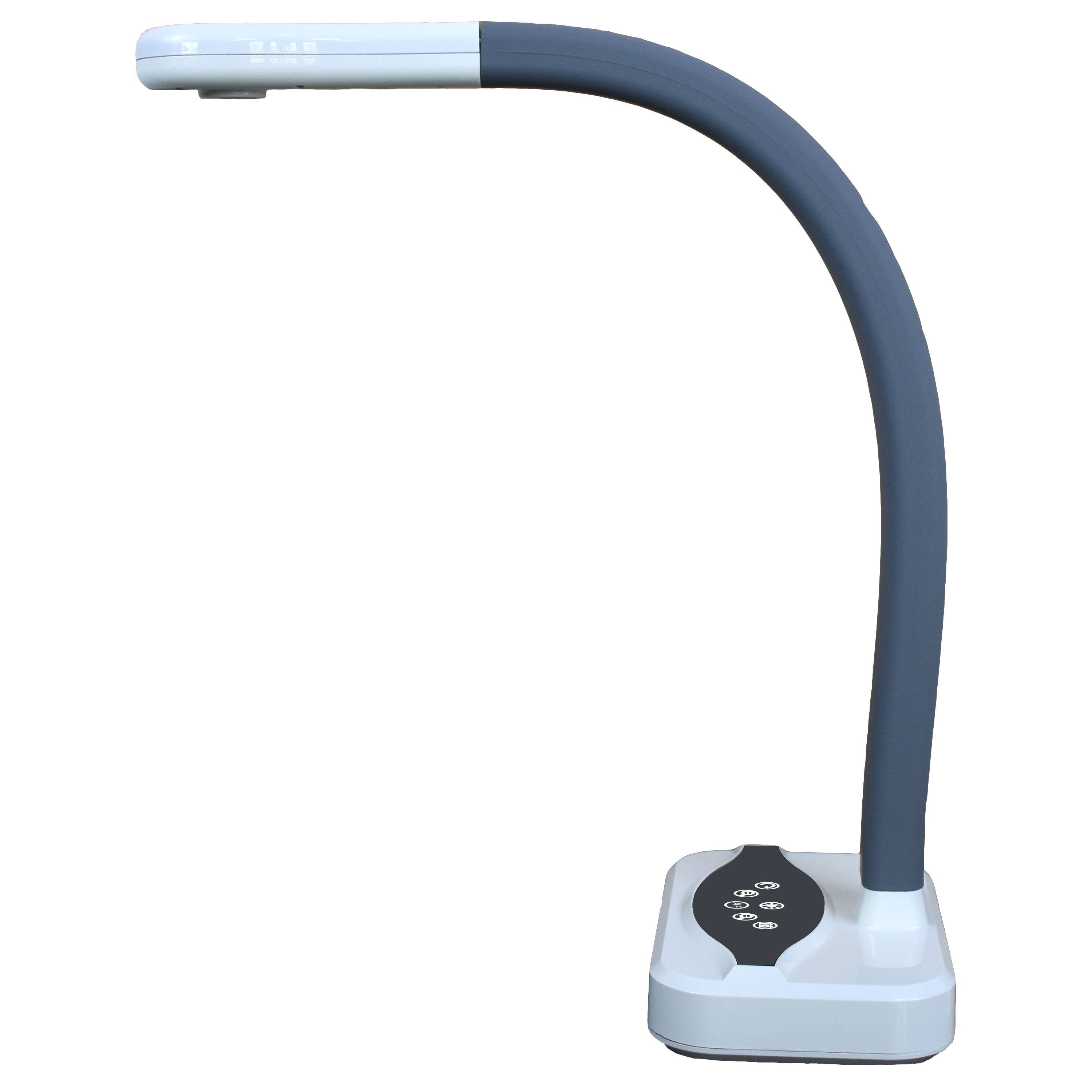
ShenMaiDi 13MP Foldable Document Camera with SDK
A 13MP foldable USB visualizer with CMOS sensor, 1-second scan support and SDK access. A good match for software integrators and Chromebook or Windows classrooms.
View product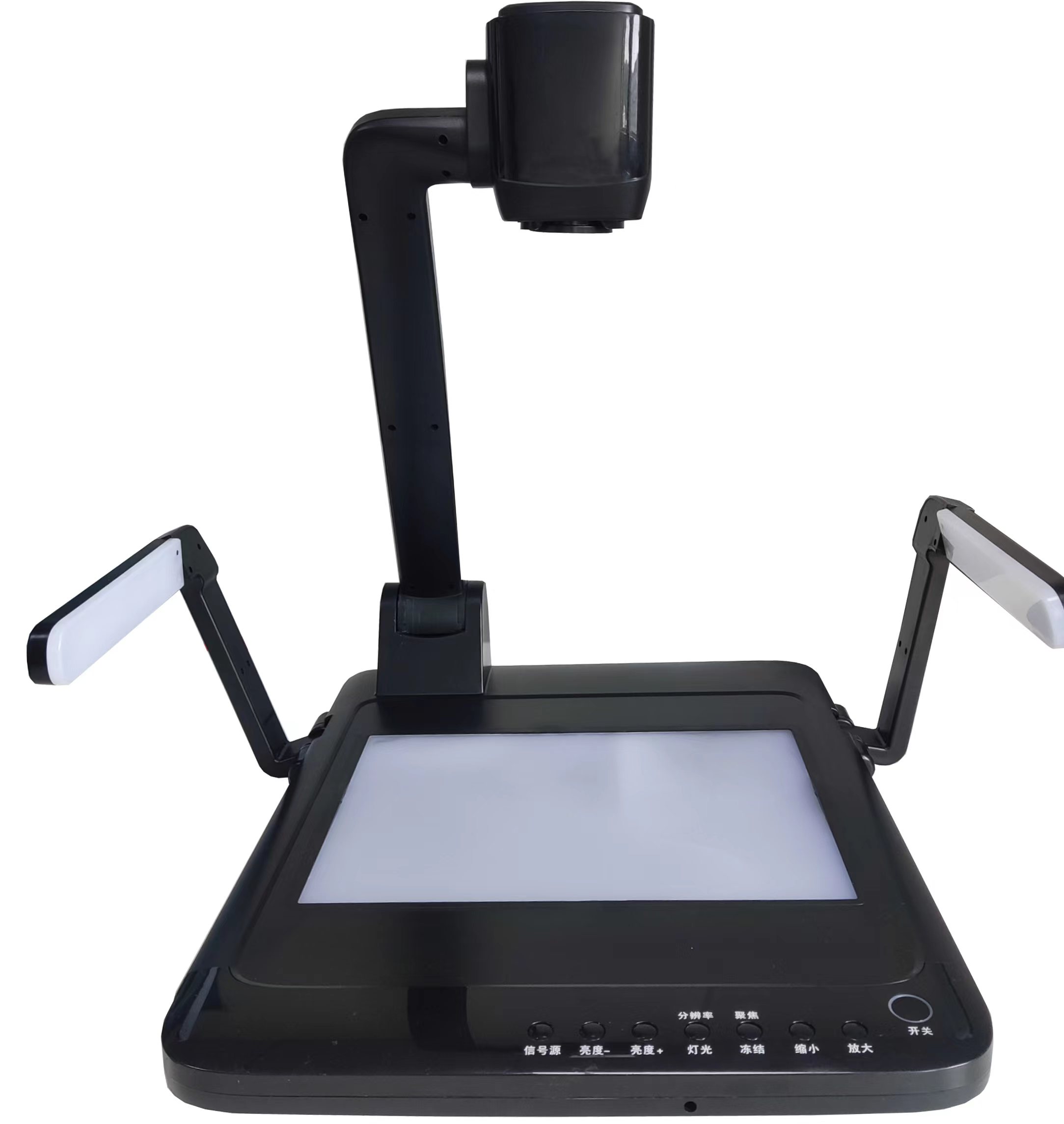
Optical A3/A4 Document Camera with Adjustable LED Lighting
An optical A3/A4 document camera with adjustable LED illumination for art, calligraphy, science objects and detailed textbook pages. Useful where lighting conditions vary.
View product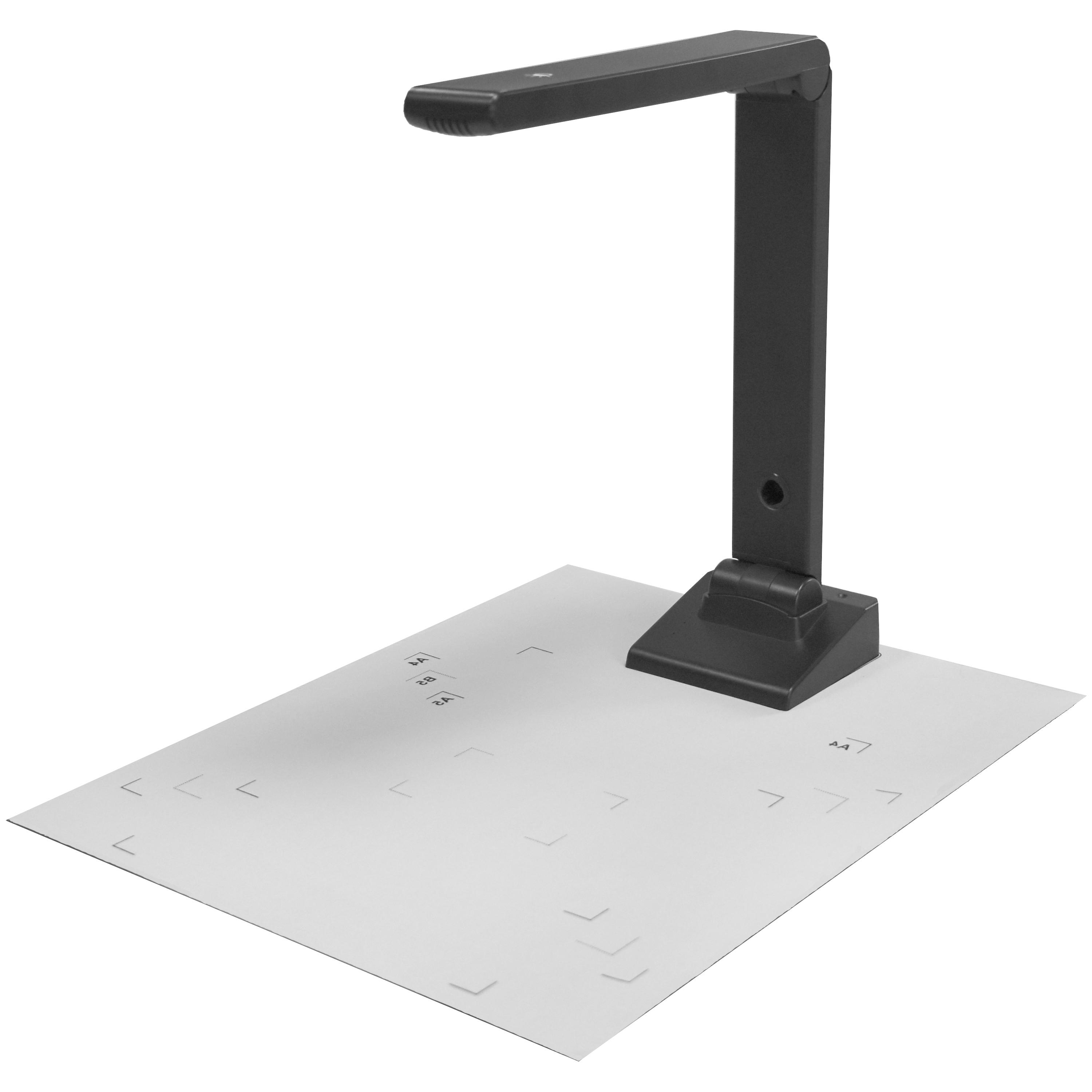
ShenMaiDi 8MP Portable A3/A4 Document Scanner with Text Conversion
An 8MP portable scanner with assisted text conversion, 24-bit colour depth and USB/SDK support. Suitable for administrative counters, libraries and paper-to-digital workflows.
View product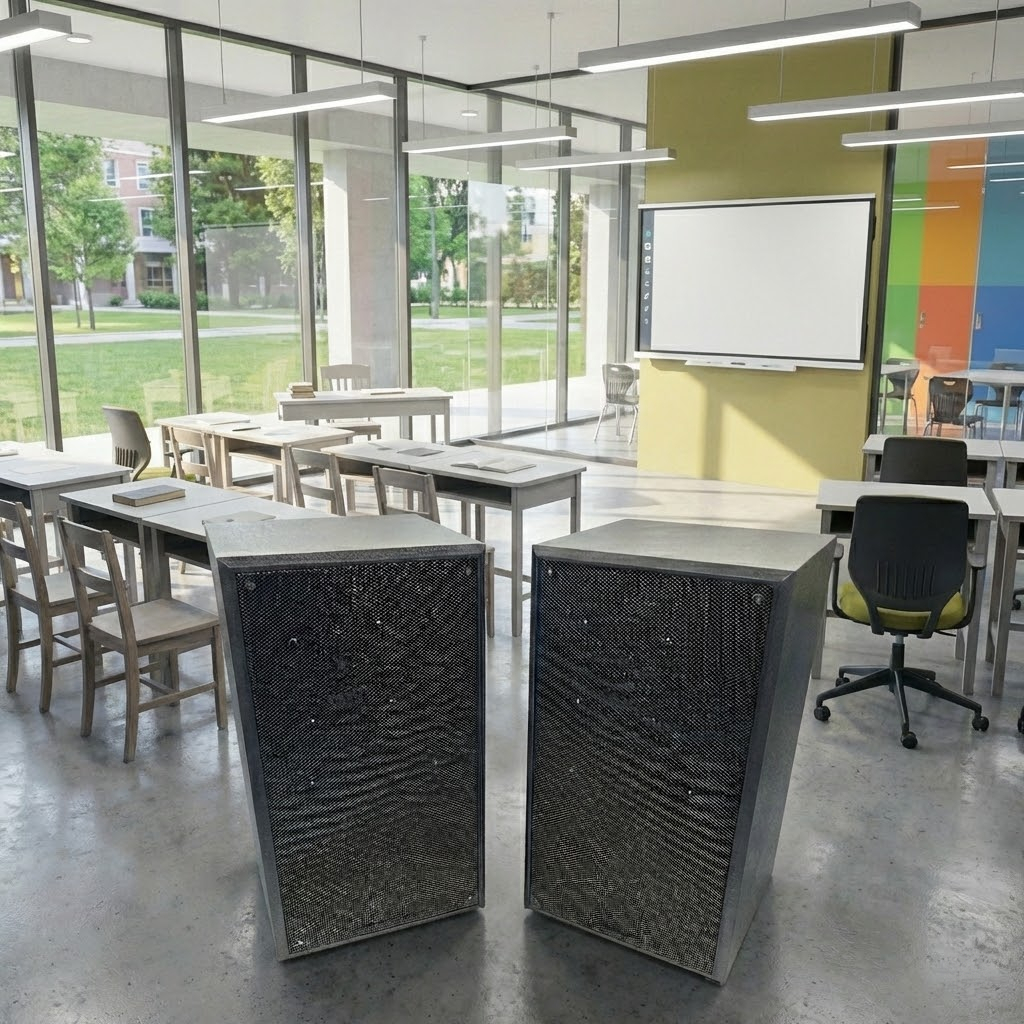
SHENMAIDI MD-S50A 50W Infrared Classroom Stereo Amplifier
A 50W infrared integrated stereo speaker for classroom voice reinforcement. Completes a visualizer and interactive-board package for tender-ready Japanese classroom kits.
View productBuilt for the Japanese Channel, Not Just the Global Catalogue
Japan is a quality-sensitive market where the buying decision rarely stops at resolution and price. Wholesalers, Boards of Education, systems integrators and corporate procurement teams evaluate compliance, documentation, after-sales response and long-term supply. The practical points below are the ones our sales engineers review first with Japanese-facing RFQs.
100 V Power & Compliance Planning
Most Japanese deployments operate on 100 V / 50–60 Hz. For document cameras with external AC adapters, specify a PSE-compliant power supply for Japan. USB bus-powered models can avoid a separate mains adapter in many installations. Where VCCI, RoHS, REACH or wireless Giteki evidence is required, confirm the exact SKU and destination before tender submission.
Japanese Documentation & Packaging
Japanese buyers expect clear quick-start guides, consistent carton labels and traceable QC. OEM briefs can include Japanese artwork, buyer-label packaging, barcode rules and model-specific labelling. Translation and artwork approval should be completed before mass production so that retail and tender packs arrive ready for local distribution.
Small-Batch Validation
Pilot orders reduce procurement risk. Selected document cameras and conference cameras can start from 1 piece, most webcams and document cameras from 4–5 pieces, and interactive whiteboards typically from 30 pieces. MOQ varies by model, so confirm the target SKU before promising a first delivery to a Japanese reseller or school.
Warranty & RMA Discipline
Document cameras carry a standard 1-year warranty. Before shipment, agree the DOA process, RMA route, spare-parts kit and diagnostic photos or video required for claims. For multi-site school projects, a simple replacement workflow is often more valuable than a low unit price alone.
Classroom Integration
USB Video Class plug-and-play, A3 capture, autofocus, LED fill light and HDMI options matter in daily teaching. A document camera should work with existing projectors, interactive boards and teacher PCs without new drivers. Where a school standardises on Chromebooks, Windows or macOS, test the chosen model in the actual lesson workflow.
Wholesaler Economics
Kawelo quotes on FOB terms and accepts T/T in USD or HKD. Japanese wholesalers can consolidate document cameras, interactive whiteboards, conference cameras, USB webcams and classroom speakers from one factory, reducing supplier count and simplifying project BOMs. Combine low-risk pilot quantities with later container planning.
Where Document Cameras and Webcams Deliver Value in Japan
A document camera is not simply a substitute for a webcam. It changes the viewing angle, the capture area and the teaching or service workflow. In Japan, the strongest demand appears where staff must show physical material to a group or to a remote participant while keeping both hands free and maintaining a natural explanation flow.
Elementary & Junior High Classrooms
Teachers can place a textbook page, worksheet, science experiment, small object or calligraphy sample under the camera so the whole class sees the same detail. This is especially useful where students would otherwise crowd around a desk. GIGA School devices have increased screen access, but the document camera remains the fastest way to show a physical object without photographing and uploading it first.
High Schools, Universities & Lecture Halls
Large rooms benefit from A3 capture for handouts, formula sheets, lab notebooks and printed diagrams. A 102-inch interactive board can turn the output into a group discussion surface, while a 16MP USB visualizer keeps the source image clear. For PC-free presenting, HDMI output models are easier to integrate into fixed AV racks.
Boards of Education & Municipal Training
Training sessions often require live demonstration of forms, curriculum materials and classroom techniques. A document camera gives trainers a stable overhead view for both in-room and remote participants. Procurement teams should ask for model-specific datasheets, power accessory details and warranty terms so that the device can move smoothly through internal approval.
Corporate Meeting Rooms & Hybrid Work
For hybrid meetings, a USB webcam is usually best for eye-level participant video, while a document camera is better for documents, product samples, signed forms and whiteboard capture. A 90° wide-angle webcam with built-in microphone can cover a huddle space, while a conference camera with optical zoom is better for deeper rooms. The two categories solve different problems and often sit in the same project.
Retail, Hospitality & Customer Service
Staff can show product labels, small components, warranty cards or order forms to a customer or remote support team without passing items back and forth. In retail and hospitality training, a visualizer can record or display handling steps consistently. A webcam at the counter is useful for remote interpretation and face-to-face service, while an overhead camera captures the item itself.
Libraries, Counters & Administrative Workflows
Paper remains central to many administrative processes. A document scanner or visual presenter can show a form to a colleague, capture a page for internal review or assist with text conversion. For privacy-sensitive environments, define the capture area, background and storage policy before deployment. Non-contact viewing can also reduce unnecessary handling of shared documents.
Japan Market Trends Shaping Document Camera and Webcam Procurement
The Japanese buying cycle rewards suppliers who understand how products are adopted, supported and renewed. Resolution alone is not enough. The following trends explain why buyers increasingly ask for UVC compatibility, SDK access, OCR, local-language documentation and a clear compliance path.
GIGA School Refresh & Classroom Interoperability
Japan’s GIGA School initiative has made digital devices a normal part of classroom life, but it has not removed the need to show physical textbooks, experiments and student work. The procurement focus is shifting toward devices that connect quickly to existing projectors, displays and teacher PCs. UVC plug-and-play and stable autofocus are therefore more valuable than a long list of unused features.
Paper-Rich Administration Meets Digital Transformation
Digital transformation in schools and local government does not eliminate paper overnight. OCR, text conversion and overhead scanning help staff bridge paper forms and digital records. The MD-B800H OCR presenter and the 8MP text-conversion scanner are useful where the buyer wants to display a document and create a digital reference without a flatbed scanner workflow.
Hybrid Work and the Webcam Upgrade Cycle
Remote meetings have made webcam quality a standard procurement item. Japanese offices often prefer a clean, eye-level view with a built-in microphone, wide field of view and simple USB connection. A 1080P webcam with a 90° field of view suits small meeting spaces, while a 4K conference camera with optical zoom is better for medium and large rooms. Privacy shutters and predictable drivers are practical buying points.
Compliance Evidence Before Price Negotiation
Japanese procurement teams often need to confirm power supply requirements, electromagnetic compatibility, hazardous-substance controls and wireless certification before an item can enter a tender. A supplier that can organise model-level datasheets, CE evidence, RoHS or REACH declarations and adapter specifications early in the process reduces approval risk. Buyers should always verify the exact SKU rather than relying on a category-level statement.
Smaller Initial Orders, Faster Validation
Wholesalers increasingly test demand before committing to large inventory. Flexible MOQs and mixed-model trial orders help Japanese resellers validate a category in selected schools or offices. A first order may be small, but the long-term opportunity depends on stable quality, spare-parts support and consistent packaging across repeat shipments.
Total Cost of Ownership Over Unit Price
Schools and enterprises evaluate installation time, teacher training, failure rate, warranty response and future availability. A slightly higher unit price can be justified if the supplier provides clear documentation, predictable firmware and a reliable RMA process. For Japanese wholesalers, the best supplier is one that helps protect the end-customer relationship, not merely the lowest quotation.
Document Camera or Webcam? A Practical Guide for Japanese Buyers
Use the application first, then the specification. A high-resolution webcam cannot replace an overhead A3 document camera for textbook pages, and a document camera is not designed to be the main eye-level camera for a hybrid meeting. Many Japanese projects need both categories.
| Application | Best-fit product family | Why it fits |
|---|---|---|
| Whole-class display of books, worksheets and objects | 16MP A4/A3 USB visualizer; MD-B800H 8MP presenter | A3 capture area, autofocus and LED lighting let teachers show fine detail without passing materials around the room. |
| Paper-to-digital and text conversion | MD-B800H OCR presenter; 8MP text-conversion scanner | OCR and assisted text conversion support administrative workflows while keeping the original page visible for verification. |
| Large interactive teaching wall | 102-inch interactive smart whiteboard projector | Creates a large shared annotation surface for lecture halls, training rooms and group teaching. |
| Hybrid meeting room participant view | Kawelo USB webcam range; conference camera range | Eye-level video, built-in microphone and 90° wide-angle options suit small rooms; optical zoom is better for larger rooms. |
| Classroom audio reinforcement | MD-S50A 50W infrared stereo amplifier | Supports voice distribution in larger classrooms and completes a visualizer plus display package. |
Why Kawelo Is a Practical Manufacturing Partner for Japanese Wholesalers
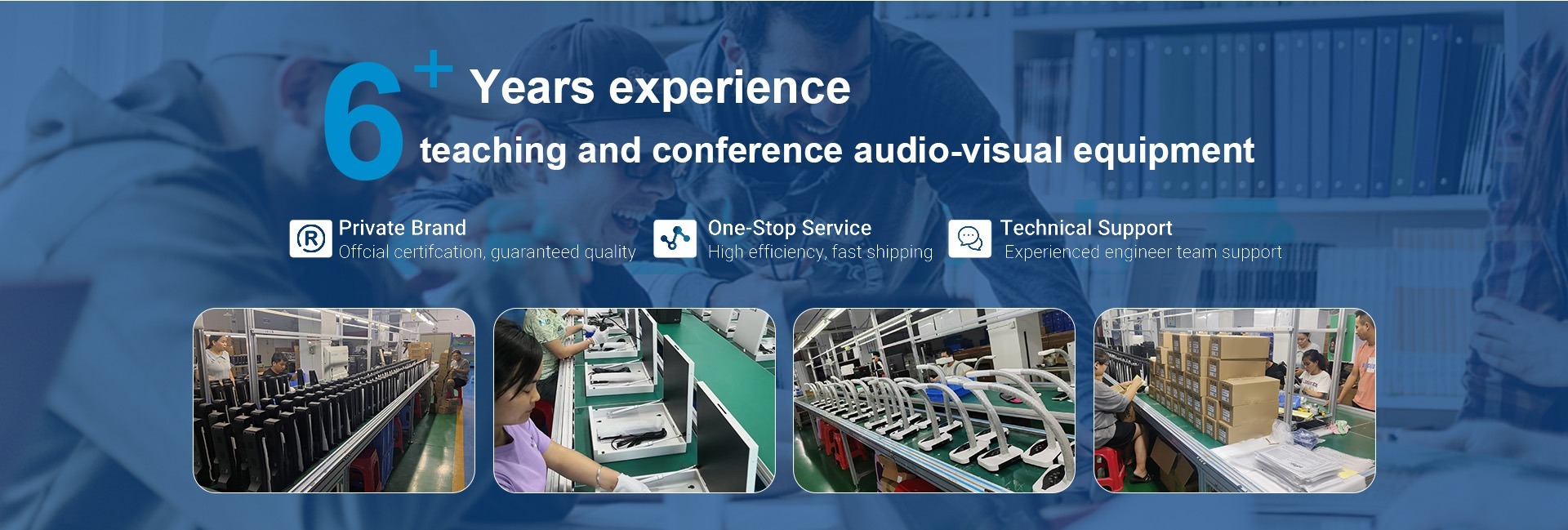
Shenzhen Kawelo Electronic Technology Co., Ltd. is a manufacturer with an integrated trading function. Our production site in Dongguan, Guangdong has been assessed onsite by SGS, and R&D, firmware, assembly, QC and packing are handled in-house. That structure gives Japanese buyers a single point of contact for document cameras, interactive whiteboards, conference cameras, USB webcams and classroom audio.
Founded in 2019 near the Guangming Science City high-tech park, Kawelo is led by a founder with 18 years of experience in visualizers, cameras and teaching equipment. Our work covers chip-level solution selection, imaging and sensing algorithms, firmware development, audio tuning, assembly and testing. This matters to Japanese wholesalers because it reduces the gap between a catalogue specification and the product that actually arrives in a classroom or meeting room.
The company operates from a production floor of approximately 3,000 m² or less with 11–50 staff and an annual output value of US$2.5M–US$5M. We support OEM service, design service and buyer-label production, including logo printing, custom packaging and graphic customisation. Firmware is flashed and verified in-house on dedicated burning stations, and finished units pass image, audio and function checks before export packing.
Our document camera range carries CE certification, the company is quality-management certified, and the factory has passed an onsite supplier assessment by SGS Group. For Japanese enquiries, we recommend starting with the target application, quantity, packaging language and power-adapter requirement. That allows our sales engineers to quote a realistic FOB solution rather than an incomplete unit price.
- Manufacturer with integrated trading function
- SGS onsite supplier assessment passed
- In-house R&D, firmware, assembly and QC
- OEM/ODM, buyer label and custom packaging
- CE-certified document camera range
- Flexible MOQ from selected models
- FOB terms; T/T in USD or HKD
- Export experience in Southeast Asia, Africa, North America and Oceania
Your Brand, Your Packaging
Logo printing, custom gift boxes, graphic customisation and full buyer-label production support private-brand ranges for Japanese distributors. Packaging copy can be prepared for local retail or tender delivery once artwork and translation are approved.
Chip-to-Firmware Engineering
In-house imaging and audio algorithm work, firmware flashing and SDK support help software integrators. For banks, government counters, libraries and education platforms, SDK access can shorten the integration cycle compared with a generic USB camera.
Third-Party Verified Quality
SGS onsite assessment, verified production lines and CE-certified document cameras reduce sourcing risk. Model-level datasheets and available certification evidence can be prepared for tender packs, subject to final SKU confirmation.
Flexible Order Sizes
Selected models can start from 1 piece for samples or validation. Most webcams and document cameras start from 4–5 pieces, while interactive whiteboards typically start from 30 pieces. This structure supports pilot programmes before larger school or enterprise rollouts.
Complete Room Bundles
Pair document cameras, interactive whiteboards, conference cameras, USB webcams and speakers from one supplier. This simplifies procurement for Japanese wholesalers serving schools, universities, municipal facilities and corporate meeting rooms.
Export-Ready Operations
Kawelo quotes on FOB terms and accepts T/T payment in USD or HKD. Shipping and documentation can be planned around the buyer’s forwarder, destination port and packaging requirements. Our main export markets include Southeast Asia, Africa, North America and Oceania.
Common Purchasing Questions from Japanese Wholesalers & Project Buyers
These are the questions our sales team receives most often before a first order. For a tender or private-label project, send the target model, quantity, destination port, packaging language and any compliance requirements so that the reply can be specific rather than generic.
Is Kawelo a manufacturer or a trading company?
Can you supply Japanese wholesalers and project integrators?
What certifications are relevant for Japan?
Do you provide Japanese-language manuals and packaging?
What is the minimum order quantity?
Can I order a sample before a wholesale order?
What warranty and RMA support do you provide?
Do your document cameras support OCR, SDK and UVC?
Which models suit Japanese classrooms best?
What payment and delivery terms do you accept?
Can you bundle whiteboards, cameras, speakers and webcams?
Why choose a document camera instead of a webcam?
Send Your Japanese Wholesale or Project RFQ
Share the target model, annual quantity, packaging language, power-adapter requirement and destination port. Our team will reply with an FOB quotation, model datasheets and a sample plan for Japanese education, enterprise or public-sector projects.